Exploring Healthy relationship tips, this introduction delves into effective communication, setting boundaries, and nurturing mutual respect in relationships. The discussion aims to provide valuable insights for fostering healthy and lasting connections.
It also covers building trust, spending quality time together, and managing conflicts in a relationship to promote understanding and growth between partners.
Healthy Relationship Tips
Effective communication is key in maintaining a healthy relationship. It involves actively listening to your partner, expressing your thoughts and feelings clearly, and being open to compromise. By communicating openly and honestly, you can avoid misunderstandings and build trust in your relationship.
Strategies for Effective Communication
- Avoid assumptions and listen actively to your partner without interrupting.
- Use “I” statements to express your feelings and avoid blaming language.
- Be willing to compromise and find solutions together when conflicts arise.
Healthy Boundaries in a Relationship
Setting boundaries is essential for a healthy relationship as it helps define what is acceptable and what is not. Examples of healthy boundaries include respecting each other’s personal space, having trust in each other, and maintaining individual interests and friendships outside the relationship.
The Importance of Mutual Respect
- Respect is the foundation of a healthy relationship and involves valuing each other’s opinions, feelings, and boundaries.
- Show appreciation and acknowledgment for your partner’s efforts and qualities.
- Avoid disrespectful behaviors such as name-calling, belittling, or invalidating your partner’s feelings.
Building Trust
Building trust with your partner is essential for a healthy and strong relationship. Trust forms the foundation of a lasting bond and can be nurtured through various ways.
Ways to Build Trust:
- Communicate openly and honestly: Share your thoughts, feelings, and concerns with your partner to establish transparency.
- Be reliable and consistent: Follow through on your promises and commitments to show that you can be trusted.
- Show empathy and understanding: Listen actively to your partner, validate their emotions, and offer support when needed.
- Respect boundaries: Honor each other’s boundaries and privacy to build a sense of security and respect in the relationship.
- Be vulnerable: Share your fears, insecurities, and vulnerabilities with your partner to deepen emotional intimacy and trust.
Rebuilding Trust:
- Acknowledge the breach: Take responsibility for your actions that led to the trust being broken.
- Apologize sincerely: Offer a genuine apology and express remorse for the hurt caused.
- Commit to change: Show through consistent actions that you are committed to rebuilding trust and making amends.
- Seek counseling: Consider seeking professional help to navigate the process of rebuilding trust and addressing underlying issues.
- Give it time: Rebuilding trust takes time and patience, so allow space for healing and rebuilding the bond.
The Role of Honesty and Transparency:
- Honesty is the cornerstone of trust in a relationship. Being truthful and transparent in your communication fosters a sense of reliability and authenticity.
- Transparency involves sharing information openly and willingly, without hiding or withholding important details. It builds a sense of openness and integrity in the relationship.
- Practicing honesty and transparency consistently strengthens the trust between partners and creates a safe and secure environment for emotional connection and vulnerability.
Quality Time Together
Spending quality time together as a couple is essential for nurturing a healthy relationship. It allows partners to connect, communicate, and strengthen their bond. Here are some ideas to help you make the most of your time together.
Maintaining Individual Interests
It’s important for each partner to maintain their individual interests even while in a relationship. This not only helps in personal growth but also adds depth and variety to the relationship. Here are some ways to balance individual interests while nurturing the relationship:
- Encourage each other to pursue hobbies and passions.
- Schedule time for personal activities and interests.
- Respect each other’s need for alone time.
Activities to Strengthen the Bond
Engaging in activities together can strengthen the bond between partners and create lasting memories. Here are some examples of activities that can bring you closer as a couple:
- Going for a hike or nature walk.
- Taking a cooking class together.
- Planning a weekend getaway or mini-vacation.
- Volunteering for a cause you both care about.
- Having a movie or game night at home.
Managing Conflict
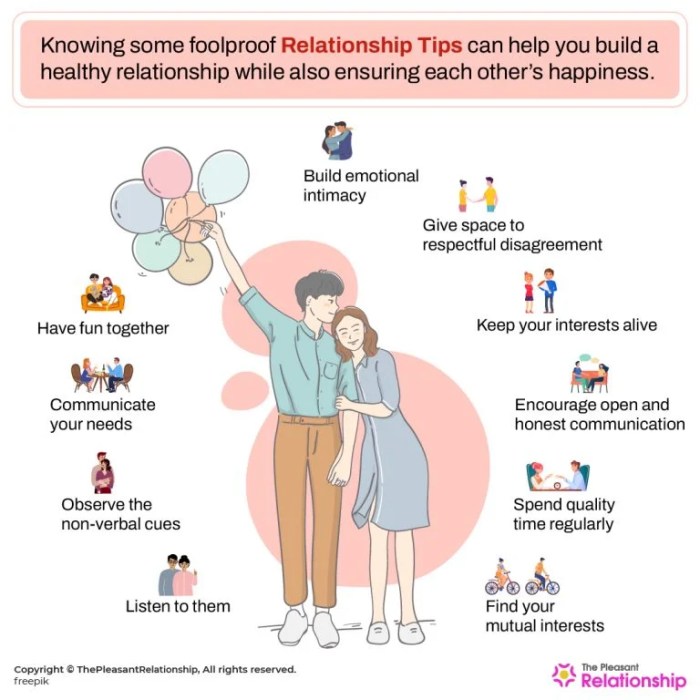
Conflict is a natural part of any relationship, but it’s how you handle it that can make all the difference. Here are some healthy ways to resolve conflicts in a relationship:
Active Listening
Active listening is crucial during disagreements. It involves fully concentrating, understanding, responding, and remembering what is being said. Here are some tips for active listening:
- Avoid interrupting the other person
- Repeat back what the other person has said to ensure understanding
- Show empathy and validate their feelings
Importance of Compromise and Empathy
Compromise and empathy play a significant role in conflict resolution. It’s essential to find a middle ground and understand each other’s perspectives. Here are some ways to practice compromise and empathy:
- Put yourself in the other person’s shoes
- Be willing to make concessions for the greater good of the relationship
- Acknowledge and respect each other’s feelings and viewpoints
In conclusion, Healthy relationship tips offer a roadmap for couples to enhance their bond through open communication, trust-building, quality time, and conflict resolution. By implementing these strategies, partners can cultivate a strong and harmonious relationship.
Key Questions Answered
How can I improve communication in my relationship?
To enhance communication, focus on active listening, expressing your feelings clearly, and being open to feedback from your partner.
What are some examples of healthy boundaries in a relationship?
Healthy boundaries can include respecting each other’s personal space, setting limits on acceptable behavior, and communicating openly about needs and expectations.
Why is compromise important in conflict resolution?
Compromise allows both partners to find common ground and work towards solutions that benefit the relationship as a whole, fostering understanding and cooperation.