Communication in relationships Enhancing Connection and Understanding

Communication love relationships between importance talk relationship couples life good make has made communicating sacrifices parents people oxygen communicate effective

As Communication in relationships takes center stage, this opening passage beckons readers with casual formal language style into a world crafted with good knowledge, ensuring a reading experience that is both absorbing and distinctly original.

Effective communication is the cornerstone of healthy relationships, shaping the way individuals connect, understand, and navigate their emotional bonds. Dive into this exploration of how communication styles, barriers, and dynamics play pivotal roles in the intricate web of relationships.

Communication in Relationships

Communication love relationships between importance talk relationship couples life good make has made communicating sacrifices parents people oxygen communicate effective

Effective communication is vital in relationships as it helps build trust, understanding, and intimacy between partners. It allows individuals to express their thoughts, feelings, and needs openly, leading to better conflict resolution and problem-solving. Without clear and honest communication, misunderstandings can arise, leading to resentment and distance in the relationship.

Impact of Communication Styles

Different communication styles can impact relationships positively or negatively. For example, using assertive communication, where individuals express their thoughts and feelings respectfully, can lead to healthy dialogue and mutual respect. On the other hand, using aggressive or passive communication styles can create tension, power struggles, and emotional distance in relationships.

Role of Active Listening

Active listening plays a crucial role in fostering healthy communication within relationships. It involves fully concentrating on what the other person is saying, understanding their perspective, and responding thoughtfully. By practicing active listening, individuals show empathy, validation, and a willingness to understand their partner’s feelings, which strengthens emotional connection and trust.

Nonverbal Communication Cues

Nonverbal communication cues, such as body language, facial expressions, tone of voice, and gestures, also play a significant role in relationships. These cues can convey emotions, intentions, and attitudes that words alone may not express. For example, a warm smile, eye contact, or a comforting touch can communicate love, support, and care without saying a word. Being aware of and interpreting these nonverbal cues can enhance understanding and emotional connection in relationships.

Types of Communication in Relationships

Verbal and nonverbal communication play vital roles in maintaining healthy relationships. While verbal communication involves spoken words, nonverbal communication includes gestures, facial expressions, and body language that convey messages without words.

Written Communication in Long-Distance Relationships

In long-distance relationships, written communication through texts, emails, letters, or social media messages becomes essential. These written messages help bridge the physical gap between partners and provide a sense of connection and intimacy despite the distance.

Technology’s Influence on Modern Relationships

Technology has revolutionized communication in modern relationships, making it easier to stay connected through various platforms like video calls, messaging apps, and social media. However, it can also lead to misunderstandings and misinterpretations due to the lack of nonverbal cues present in face-to-face interactions.

Body Language in conveying Messages

Body language plays a crucial role in relationships, as it can convey emotions, intentions, and feelings without saying a word. Examples include crossed arms indicating defensiveness, eye contact showing interest, or a smile expressing happiness. Being aware of these nonverbal cues can help partners understand each other better and strengthen their bond.

Barriers to Communication in Relationships

Effective communication in relationships can often be hindered by various barriers that prevent clear and open dialogue. These barriers can range from external factors to internal emotions that impact the way we interact with our partners. It is essential to identify and address these barriers to maintain healthy and strong relationships.

Cultural Differences in Communication

Cultural differences can create significant challenges in communication within relationships. Divergent communication styles, norms, and expectations based on cultural backgrounds can lead to misunderstandings and conflicts. It is crucial to recognize and respect these differences to foster mutual understanding and effective communication.

Emotional Barriers in Communication

Emotional barriers, such as fear, insecurity, and past experiences, can significantly impact communication within relationships. These barriers often result in defensive or closed-off behavior, making it difficult to express thoughts and feelings openly. It is important to address these emotional barriers through empathy, active listening, and vulnerability to create a safe space for open communication.

Strategies to Overcome Communication Barriers

To overcome communication barriers in relationships, it is essential to practice active listening, empathy, and transparency. Setting aside time for meaningful conversations, expressing thoughts and feelings honestly, and seeking clarification when needed can help improve communication. Additionally, couples can benefit from couples therapy or counseling to navigate communication challenges and strengthen their bond.

Relationship Dynamics

Effective communication plays a crucial role in resolving conflicts in relationships. When partners are able to openly express their thoughts and feelings, listen actively, and work towards finding common ground, they can address issues in a constructive manner. By communicating effectively, couples can avoid misunderstandings, reduce tension, and find mutually acceptable solutions to conflicts.

Importance of Establishing Trust Through Communication

Establishing trust through communication is essential in relationships as it forms the foundation for a strong and lasting bond between partners. Trust allows individuals to feel safe, vulnerable, and secure in sharing their innermost thoughts and emotions with their significant other. When partners communicate honestly, openly, and transparently, they build trust and create a sense of intimacy that strengthens their relationship.

  • Trust enables partners to rely on each other and feel supported in times of need.
  • Open communication fosters a sense of security and emotional connection in relationships.
  • Building trust through communication helps partners feel understood and valued by their significant other.

How Open and Honest Communication Fosters Intimacy

Open and honest communication is a key factor in fostering intimacy in relationships. When partners feel comfortable sharing their thoughts, feelings, desires, and fears with each other, they create a deep emotional connection that enhances their bond. By communicating openly and honestly, couples can build intimacy, strengthen their emotional connection, and deepen their understanding of each other.

Intimacy thrives on mutual trust, vulnerability, and emotional closeness, all of which are nurtured through open and honest communication.

Examples of How Effective Communication Strengthens the Bond Between Partners

Effective communication can strengthen the bond between partners in various ways. For example, when partners communicate openly and actively listen to each other, they demonstrate respect, empathy, and understanding, which helps deepen their emotional connection. By sharing their thoughts, experiences, and feelings with each other, couples can create a sense of unity, mutual support, and shared goals that strengthen their relationship.

  • Discussing personal goals and aspirations together can help partners align their visions for the future and work towards common objectives.
  • Expressing gratitude, appreciation, and affection through communication can foster feelings of love and connection between partners.
  • Resolving conflicts through effective communication can lead to increased trust, understanding, and emotional intimacy in relationships.

In conclusion, the art of communication in relationships is a multifaceted journey filled with nuances that can either bridge gaps or create distance. By recognizing the importance of active listening, nonverbal cues, and honest dialogue, individuals can cultivate stronger, more resilient connections with their partners.

Essential FAQs

How can cultural differences impact communication in relationships?

Cultural differences can lead to misunderstandings and misinterpretations in communication, highlighting the need for empathy, openness, and a willingness to learn from each other.

What role does trust play in communication within relationships?

Trust is the foundation of effective communication in relationships, fostering vulnerability, honesty, and a sense of security that strengthens the emotional bond between partners.

How does body language influence communication in relationships?

Body language can convey emotions, intentions, and attitudes that words may not express, offering valuable insights into the underlying dynamics of a relationship.

Relationship problems and solutions Navigating Difficulties in Love

Problems

As Relationship problems and solutions take the spotlight, this opening passage invites readers with a blend of knowledge and insight, ensuring an informative yet engaging read.

Delve into the complexities of relationships, exploring common issues faced by couples and the strategies to overcome them.

Understanding Relationship Problems

When it comes to relationships, it’s common for couples to face various challenges that can impact their bond. These issues can range from lack of communication to trust issues, and they can have a significant impact on the overall health of the relationship.

Common Relationship Issues

  • Communication Problems: One of the most common issues in relationships is the lack of effective communication. This can lead to misunderstandings, unresolved conflicts, and feelings of being unheard.
  • Trust Issues: Trust is essential in any relationship, and when it’s broken, it can be challenging to rebuild. Trust issues can stem from past experiences, insecurities, or dishonesty.
  • Intimacy Issues: Physical and emotional intimacy are vital components of a healthy relationship. Issues in this area can lead to feelings of disconnectedness and dissatisfaction.

Impact of Unresolved Issues

  • Distance and Disconnection: Unresolved problems can create distance between partners, leading to feelings of loneliness and alienation.
  • Resentment and Anger: When issues are left unaddressed, they can fester and lead to resentment and anger, which can erode the foundation of the relationship.
  • Deterioration of Trust: Trust is fragile and can be easily damaged. Unresolved issues can chip away at trust, making it difficult to maintain a strong and healthy bond.

Importance of Communication

Effective communication is crucial in addressing and resolving relationship problems. It allows partners to express their thoughts, feelings, and concerns in a healthy and constructive manner. By communicating openly and honestly, couples can work together to find solutions, rebuild trust, and strengthen their connection.

Root Causes of Relationship Problems

Relationship problems can stem from various factors that impact the dynamics between individuals. Understanding these root causes is crucial in resolving conflicts and fostering healthier relationships.

External Influences vs. Internal Dynamics

External influences, such as societal norms, family expectations, and cultural differences, can play a significant role in creating conflict within relationships. These external factors may impose certain pressures or values that clash with the individuals’ personal beliefs or desires, leading to misunderstandings and disagreements.

It is essential to recognize and address these external influences to find common ground and build mutual understanding within the relationship.

Past Experiences Impacting Current Relationships

Past experiences, such as childhood traumas, previous relationships, or personal struggles, can deeply influence how individuals behave and communicate in their current relationships. Unresolved issues from the past may manifest in the present, causing tension and conflict between partners.

By acknowledging and processing past experiences, individuals can work towards healing and creating healthier relationship dynamics.

Effective Communication Strategies

Effective communication is crucial in maintaining a healthy relationship. It involves not only expressing your thoughts and feelings but also listening actively and empathetically to your partner. Here are some strategies to enhance communication in relationships:

Examples of Healthy Communication Patterns

  • Open and honest communication: Being transparent about your feelings and thoughts helps build trust in the relationship.
  • Validation: Acknowledging your partner’s feelings and showing empathy can strengthen emotional bonds.
  • Active listening: Paying attention to what your partner is saying without interrupting, and responding thoughtfully.
  • Using “I” statements: Expressing your feelings and thoughts without blaming your partner can prevent conflicts.

Active Listening Techniques

Active listening is a fundamental skill that can improve understanding between partners. Here are some techniques to enhance active listening:

“Active listening involves not only hearing the words but also understanding the emotions and intentions behind them.”

  • Give your full attention: Avoid distractions and focus on your partner when they are speaking.
  • Paraphrase: Repeat what your partner said in your own words to ensure you understood correctly.
  • Ask clarifying questions: Seek clarification if something is unclear to avoid misunderstandings.
  • Show empathy: Acknowledge your partner’s feelings and validate their emotions.

The Role of Empathy in Resolving Conflicts

Empathy plays a crucial role in resolving conflicts in relationships. By putting yourself in your partner’s shoes and understanding their perspective, you can foster empathy and compassion. Empathy allows you to connect emotionally with your partner and find mutually beneficial solutions to conflicts.

Building Trust and Intimacy

Building trust and intimacy are essential components of a healthy relationship. Trust is the foundation upon which intimacy is built, as it allows individuals to feel secure, vulnerable, and connected with their partner. Intimacy, on the other hand, involves emotional closeness, open communication, and a deep sense of connection with one another.

Rebuilding Trust After It Has Been Broken

Rebuilding trust after it has been broken is a challenging but necessary process in any relationship. It requires both partners to be committed to the journey of healing and rebuilding the foundation of trust. Some ways to rebuild trust include:

  • Open and honest communication: Discussing the issues that led to the breach of trust and expressing feelings openly can help rebuild trust.
  • Consistency and follow-through: Following through on commitments and promises over time can demonstrate reliability and build trust.
  • Seeking professional help: In some cases, couples may benefit from the guidance of a therapist or counselor to navigate the process of rebuilding trust.
  • Setting boundaries: Establishing clear boundaries and expectations can help prevent future breaches of trust and foster a sense of security in the relationship.

The Importance of Boundaries in Fostering Intimacy

Boundaries play a crucial role in fostering intimacy within a relationship by establishing a sense of safety, respect, and trust between partners. Setting and respecting boundaries enables individuals to feel comfortable expressing their needs, desires, and vulnerabilities, leading to deeper emotional connections. Some ways in which boundaries can foster intimacy include:

  • Respecting personal space: Allowing each other time and space for individual pursuits can help maintain a healthy balance between togetherness and independence.
  • Communicating openly: Discussing boundaries and expectations openly can lead to a deeper understanding of each other’s needs and promote mutual respect.
  • Reinforcing trust: Respecting and honoring each other’s boundaries can build trust and create a safe environment for emotional intimacy to flourish.
  • Setting limits: Establishing clear boundaries around sensitive topics or behaviors can prevent misunderstandings and conflicts, fostering a stronger bond between partners.

Seeking Professional Help

Problems

Seeking professional help through couples therapy can be beneficial when relationship problems persist despite efforts to resolve them on your own. Therapists are trained to help couples improve communication, address underlying issues, and develop healthier patterns in their relationship.

Discussing the Stigma Surrounding Therapy

Therapy can sometimes carry a stigma of being only for those with severe mental health issues, which can make it challenging for some couples to seek help. However, therapy is a valuable tool for improving relationships and should not be seen as a sign of weakness. Overcoming this stigma involves reframing therapy as a proactive step towards strengthening a relationship.

Tips for Finding the Right Therapist

  • Consider the therapist’s specialization: Look for a therapist who has experience and training in couples therapy specifically.
  • Seek recommendations: Ask for referrals from friends, family, or trusted healthcare providers.
  • Interview potential therapists: Schedule a consultation to gauge their approach and see if it aligns with your needs and values.
  • Consider logistics: Choose a therapist whose location, availability, and fees work for both partners.
  • Trust your instincts: Ultimately, choose a therapist with whom both partners feel comfortable and respected.

In conclusion, Relationship problems and solutions are intricately linked, requiring open communication, trust, and empathy to thrive. Navigate the ups and downs of love with these valuable insights.

Quick FAQs

How can past experiences impact current relationships?

Past experiences can influence behaviors and attitudes, affecting how individuals interact with their partners.

When should couples consider seeking professional therapy?

Couples should consider therapy when communication breakdowns persist, trust is compromised, or conflicts become unmanageable on their own.

Couples Therapy Enhancing Relationships Through Counseling

Therapy counseling

Embark on a journey to explore the world of Couples Therapy, where relationships are strengthened and nurtured through professional guidance and support. Dive into the intricacies of resolving conflicts, improving communication, and fostering trust and intimacy in relationships.

Couples Therapy

Couples therapy, also known as marriage counseling, is a form of therapy that helps couples work through relationship issues and improve their communication and connection.

Common Issues in Couples Therapy

  • Communication problems
  • Infidelity
  • Financial disagreements
  • Parenting conflicts
  • Intimacy issues

Benefits of Attending Couples Therapy

  • Improved communication skills
  • Enhanced emotional connection
  • Resolve conflicts in a healthy manner
  • Gain a deeper understanding of each other
  • Strengthen the relationship bond

Role of a Therapist in Couples Therapy

The therapist acts as a neutral third party, facilitating discussions, providing guidance, and helping couples identify and work through their issues. They create a safe space for couples to express themselves and learn effective strategies to improve their relationship.

Relationship Dynamics

Therapy counseling

Relationship dynamics refer to the patterns of interactions, behaviors, and communication between individuals in a relationship. These dynamics shape the overall quality and health of the relationship, influencing how couples perceive and relate to each other.

Healthy Relationship Dynamics

  • Effective Communication: Couples openly listen to each other, express their thoughts and feelings honestly, and work together to resolve conflicts.
  • Mutual Respect: Each partner values and respects the other’s opinions, boundaries, and autonomy.
  • Trust and Honesty: Couples are transparent with each other, trust each other’s intentions, and maintain honesty in their interactions.
  • Support and Empathy: Partners provide emotional support, understanding, and empathy towards each other’s needs and feelings.
  • Shared Goals: Couples have common goals and aspirations, working together towards a shared vision for the future.

Unhealthy Relationship Dynamics Addressed in Therapy

  • Controlling Behavior: Therapists help couples recognize and address controlling behaviors that restrict individual freedom and autonomy.
  • Poor Communication Patterns: Therapy sessions focus on improving communication skills, active listening, and expressing emotions constructively.
  • Jealousy and Insecurity: Therapists work with couples to address underlying issues of jealousy, insecurity, and trust issues in the relationship.
  • Unresolved Conflicts: Therapy provides a safe space for couples to navigate and resolve conflicts, understanding each other’s perspectives and finding common ground.
  • Codependency: Couples therapy helps partners establish healthy boundaries, independence, and self-care practices to overcome codependent patterns.

Communication Skills

Effective communication is crucial in relationships as it helps foster understanding, trust, and connection between partners. Without clear and open communication, misunderstandings and conflicts can easily arise, leading to resentment and distance in the relationship.

The Importance of Effective Communication

  • Open and honest communication allows partners to express their thoughts, feelings, and needs clearly.
  • Active listening is key to understanding your partner’s perspective and showing empathy.
  • Communication helps resolve conflicts in a constructive manner, leading to mutually beneficial solutions.

Communication Techniques Taught in Couples Therapy

  • Using “I” statements to express feelings without blaming the partner.
  • Practicing reflective listening to ensure understanding of each other’s viewpoints.
  • Setting aside dedicated time for meaningful conversations and check-ins.

Tips on Improving Communication with a Partner

  • Be present and attentive when your partner is speaking, avoiding distractions.
  • Avoid interrupting and allow your partner to finish speaking before responding.
  • Practice patience and empathy, trying to see things from your partner’s perspective.

The Impact of Poor Communication on Relationships

  • Poor communication can lead to misunderstandings, conflicts, and feelings of being unheard or unappreciated.
  • It can create a breakdown in trust and connection between partners, causing emotional distance.
  • Unresolved communication issues can build up over time, leading to resentment and potential relationship breakdown.

Conflict Resolution

Conflict resolution plays a crucial role in couples therapy as it helps partners address and resolve differences in a healthy and constructive manner. By learning effective conflict resolution skills, couples can strengthen their relationship, improve communication, and build trust.

Strategies for Resolving Conflicts in Relationships

  • Practice active listening: Focus on understanding your partner’s perspective without interrupting or formulating a response in your mind.
  • Use “I” statements: Express your feelings and needs using phrases like “I feel” or “I need,” instead of blaming or accusing your partner.
  • Take a break if needed: If emotions run high during a conflict, it’s okay to take a short break to calm down before continuing the conversation.
  • Seek compromise: Look for solutions that meet both partners’ needs and involve give-and-take to reach a resolution.
  • Attend therapy sessions: Consider seeking professional help from a therapist to learn effective conflict resolution techniques and improve communication skills.

Unresolved Conflicts and Relationship Impact

Unresolved conflicts can have a detrimental effect on a relationship, leading to resentment, emotional distance, and a breakdown in trust. Over time, unresolved conflicts can escalate and erode the foundation of the relationship, making it challenging to repair the damage and move forward in a healthy way.

Successful Conflict Resolution Examples in Couples Therapy

During therapy sessions, couples may practice active listening and use “I” statements to address underlying issues and work towards finding common ground. Through guided discussions and exercises, couples can learn to communicate effectively, validate each other’s feelings, and resolve conflicts in a constructive manner.

Trust and Intimacy

Trust and intimacy are crucial components of a healthy relationship. Trust is the foundation on which intimacy is built, as it involves feeling safe, secure, and vulnerable with your partner. In couples therapy, addressing trust issues is essential to fostering a deeper connection and improving the overall relationship dynamics.

Addressing Trust Issues

  • Open Communication: Encouraging open and honest communication can help address trust issues by allowing both partners to express their feelings and concerns.
  • Building Transparency: Creating transparency in actions and decisions can help rebuild trust by demonstrating honesty and reliability.
  • Setting Boundaries: Establishing clear boundaries and expectations can help prevent misunderstandings and build trust over time.

Rebuilding Trust

  • Showing Consistency: Consistently following through on commitments and promises can help rebuild trust and restore faith in the relationship.
  • Seeking Forgiveness: Acknowledging past mistakes, seeking forgiveness, and working towards positive change can be crucial in rebuilding trust.
  • Practicing Patience: Rebuilding trust takes time and patience, so it’s essential to be understanding and supportive throughout the process.

Role of Intimacy-building Exercises

Intimacy-building exercises in couples therapy focus on enhancing emotional closeness, physical connection, and overall intimacy between partners. These exercises can include activities such as deep conversations, physical touch, eye contact exercises, and shared experiences to deepen the bond and foster a sense of intimacy in the relationship.

In conclusion, Couples Therapy serves as a beacon of hope for couples navigating the ups and downs of relationships. Through effective communication, conflict resolution, and trust-building exercises, couples can embark on a journey towards a healthier and more fulfilling relationship.

Top FAQs

How long does couples therapy usually last?

Couples therapy sessions typically last for about 50-60 minutes, once a week. The duration can vary based on the specific needs of the couple.

Can couples therapy work if only one partner is willing to participate?

While ideally both partners should be involved, couples therapy can still be beneficial even if only one partner is initially willing to participate. The therapist can provide guidance on how to navigate this situation.

Healthy relationship tips Strategies for Communication, Boundaries, and Respect

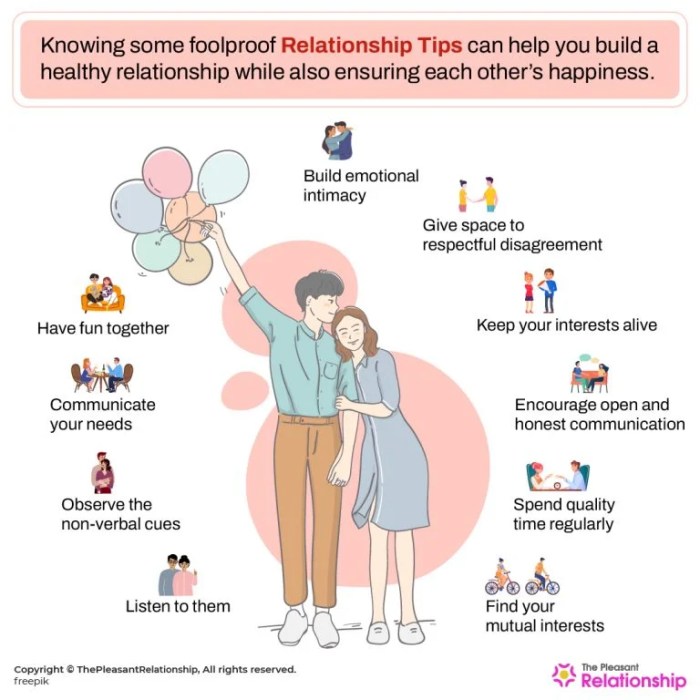
Relationship relationships healthy tips advice marriage dating infographic saved skills unhealthy like

Exploring Healthy relationship tips, this introduction delves into effective communication, setting boundaries, and nurturing mutual respect in relationships. The discussion aims to provide valuable insights for fostering healthy and lasting connections.

It also covers building trust, spending quality time together, and managing conflicts in a relationship to promote understanding and growth between partners.

Healthy Relationship Tips

Effective communication is key in maintaining a healthy relationship. It involves actively listening to your partner, expressing your thoughts and feelings clearly, and being open to compromise. By communicating openly and honestly, you can avoid misunderstandings and build trust in your relationship.

Strategies for Effective Communication

  • Avoid assumptions and listen actively to your partner without interrupting.
  • Use “I” statements to express your feelings and avoid blaming language.
  • Be willing to compromise and find solutions together when conflicts arise.

Healthy Boundaries in a Relationship

Setting boundaries is essential for a healthy relationship as it helps define what is acceptable and what is not. Examples of healthy boundaries include respecting each other’s personal space, having trust in each other, and maintaining individual interests and friendships outside the relationship.

The Importance of Mutual Respect

  • Respect is the foundation of a healthy relationship and involves valuing each other’s opinions, feelings, and boundaries.
  • Show appreciation and acknowledgment for your partner’s efforts and qualities.
  • Avoid disrespectful behaviors such as name-calling, belittling, or invalidating your partner’s feelings.

Building Trust

Building trust with your partner is essential for a healthy and strong relationship. Trust forms the foundation of a lasting bond and can be nurtured through various ways.

Ways to Build Trust:

  • Communicate openly and honestly: Share your thoughts, feelings, and concerns with your partner to establish transparency.
  • Be reliable and consistent: Follow through on your promises and commitments to show that you can be trusted.
  • Show empathy and understanding: Listen actively to your partner, validate their emotions, and offer support when needed.
  • Respect boundaries: Honor each other’s boundaries and privacy to build a sense of security and respect in the relationship.
  • Be vulnerable: Share your fears, insecurities, and vulnerabilities with your partner to deepen emotional intimacy and trust.

Rebuilding Trust:

  • Acknowledge the breach: Take responsibility for your actions that led to the trust being broken.
  • Apologize sincerely: Offer a genuine apology and express remorse for the hurt caused.
  • Commit to change: Show through consistent actions that you are committed to rebuilding trust and making amends.
  • Seek counseling: Consider seeking professional help to navigate the process of rebuilding trust and addressing underlying issues.
  • Give it time: Rebuilding trust takes time and patience, so allow space for healing and rebuilding the bond.

The Role of Honesty and Transparency:

  • Honesty is the cornerstone of trust in a relationship. Being truthful and transparent in your communication fosters a sense of reliability and authenticity.
  • Transparency involves sharing information openly and willingly, without hiding or withholding important details. It builds a sense of openness and integrity in the relationship.
  • Practicing honesty and transparency consistently strengthens the trust between partners and creates a safe and secure environment for emotional connection and vulnerability.

Quality Time Together

Spending quality time together as a couple is essential for nurturing a healthy relationship. It allows partners to connect, communicate, and strengthen their bond. Here are some ideas to help you make the most of your time together.

Maintaining Individual Interests

It’s important for each partner to maintain their individual interests even while in a relationship. This not only helps in personal growth but also adds depth and variety to the relationship. Here are some ways to balance individual interests while nurturing the relationship:

  • Encourage each other to pursue hobbies and passions.
  • Schedule time for personal activities and interests.
  • Respect each other’s need for alone time.

Activities to Strengthen the Bond

Engaging in activities together can strengthen the bond between partners and create lasting memories. Here are some examples of activities that can bring you closer as a couple:

  • Going for a hike or nature walk.
  • Taking a cooking class together.
  • Planning a weekend getaway or mini-vacation.
  • Volunteering for a cause you both care about.
  • Having a movie or game night at home.

Managing Conflict

Relationship relationships healthy tips advice marriage dating infographic saved skills unhealthy like

Conflict is a natural part of any relationship, but it’s how you handle it that can make all the difference. Here are some healthy ways to resolve conflicts in a relationship:

Active Listening

Active listening is crucial during disagreements. It involves fully concentrating, understanding, responding, and remembering what is being said. Here are some tips for active listening:

  • Avoid interrupting the other person
  • Repeat back what the other person has said to ensure understanding
  • Show empathy and validate their feelings

Importance of Compromise and Empathy

Compromise and empathy play a significant role in conflict resolution. It’s essential to find a middle ground and understand each other’s perspectives. Here are some ways to practice compromise and empathy:

  • Put yourself in the other person’s shoes
  • Be willing to make concessions for the greater good of the relationship
  • Acknowledge and respect each other’s feelings and viewpoints

In conclusion, Healthy relationship tips offer a roadmap for couples to enhance their bond through open communication, trust-building, quality time, and conflict resolution. By implementing these strategies, partners can cultivate a strong and harmonious relationship.

Key Questions Answered

How can I improve communication in my relationship?

To enhance communication, focus on active listening, expressing your feelings clearly, and being open to feedback from your partner.

What are some examples of healthy boundaries in a relationship?

Healthy boundaries can include respecting each other’s personal space, setting limits on acceptable behavior, and communicating openly about needs and expectations.

Why is compromise important in conflict resolution?

Compromise allows both partners to find common ground and work towards solutions that benefit the relationship as a whole, fostering understanding and cooperation.