Self-love and relationships Nurturing Love Within and Outside

Yourself relationship powerofpositivity

Embark on a journey exploring the intertwined realms of self-love and relationships, where the essence of nurturing oneself reflects in the connections we form with others.

Discover how self-love serves as the cornerstone for fostering healthy and fulfilling relationships, as we delve into the significance of self-esteem, setting boundaries, effective communication, and prioritizing self-care.

Self-love

Self-love plays a crucial role in maintaining healthy and fulfilling relationships. When individuals prioritize self-love, they are better equipped to give and receive love in their relationships.

Importance of Self-love in Relationships

Self-love serves as the foundation for all other types of love. When individuals have a healthy sense of self-worth and self-respect, they are more likely to establish boundaries, communicate effectively, and show empathy towards their partners.

Examples of How Practicing Self-love Can Positively Impact Relationships

  • Increased Confidence: Embracing self-love can boost confidence levels, allowing individuals to feel secure in themselves and their relationships.
  • Healthy Boundaries: Practicing self-love helps individuals set and maintain healthy boundaries in relationships, promoting mutual respect and understanding.
  • Enhanced Communication: Self-love encourages open and honest communication, leading to deeper connections and stronger emotional intimacy.

Strategies for Cultivating Self-love While in a Relationship

  • Self-care Routine: Engage in activities that promote self-care and self-compassion, such as meditation, exercise, or hobbies that bring joy.
  • Positive Affirmations: Practice positive self-talk and affirmations to boost self-esteem and reinforce a sense of self-worth.
  • Setting Boundaries: Clearly communicate your needs and boundaries to your partner, ensuring that both individuals feel respected and valued in the relationship.

Building Self-esteem

Yourself relationship powerofpositivity

Building self-esteem is crucial for healthy relationships as it directly impacts how we perceive ourselves and interact with others. When individuals have high self-esteem, they are more likely to set boundaries, communicate effectively, and make decisions that are in line with their values. On the other hand, low self-esteem can lead to feelings of inadequacy, dependency on others for validation, and difficulty asserting one’s needs in a relationship.

Ways to Boost Self-esteem in Relationships

  • Practice self-care: Taking care of your physical, emotional, and mental well-being can boost self-esteem. This includes setting aside time for activities you enjoy, getting enough rest, and seeking support when needed.
  • Challenge negative self-talk: Replace self-critical thoughts with more positive and affirming statements. Acknowledge your strengths and accomplishments, no matter how small they may seem.
  • Set boundaries: Clearly communicate your needs and limits to others. Respecting your boundaries and standing up for yourself can help reinforce feelings of self-worth.
  • Seek therapy or counseling: Working with a professional can help you explore underlying issues that contribute to low self-esteem and develop healthier coping mechanisms.

Effects of High vs. Low Self-esteem on Relationship Dynamics

  • High self-esteem: Individuals with high self-esteem are more likely to have fulfilling and balanced relationships. They are able to express themselves authentically, offer support to their partners, and navigate conflicts constructively.
  • Low self-esteem: On the other hand, individuals with low self-esteem may struggle with feelings of insecurity, jealousy, and fear of abandonment in relationships. This can lead to dependency on their partner for validation and approval, creating an imbalance in the relationship.

Setting Boundaries

Setting boundaries plays a crucial role in both self-love and relationships. It involves establishing clear limits and guidelines for what is acceptable and unacceptable behavior, helping individuals maintain their self-respect and protect their emotional well-being in any relationship.When it comes to relationships, setting healthy boundaries is essential for fostering mutual respect, trust, and understanding between partners. It allows individuals to communicate their needs, desires, and limits effectively, creating a safe and supportive environment for both parties to thrive.

By setting boundaries, individuals can ensure that their values are respected, their autonomy is preserved, and their emotional boundaries are not violated.

Examples of Healthy Boundaries in a Relationship

  • Communicating openly and honestly about feelings and expectations
  • Respecting each other’s personal space and alone time
  • Setting limits on acceptable behavior and addressing any violations promptly
  • Establishing boundaries around finances, communication, and decision-making
  • Prioritizing self-care and individual growth without feeling guilty

How Setting Boundaries Contributes to a Healthier Relationship Dynamic

Setting boundaries contributes to a healthier relationship dynamic by promoting mutual respect, trust, and emotional well-being. It allows individuals to express their needs and preferences without fear of judgment or rejection, fostering open and honest communication between partners. When both parties respect and honor each other’s boundaries, it creates a foundation of trust and understanding that strengthens the relationship over time.

Ultimately, setting boundaries helps maintain a healthy balance of independence and togetherness, ensuring that both individuals feel valued, supported, and empowered in the relationship.

Communication

Effective communication plays a crucial role in self-love as it involves expressing your needs, emotions, and boundaries clearly and assertively. When you communicate effectively, you are showing yourself love by advocating for your own well-being and ensuring that your voice is heard and respected.

Importance of Open Communication in Relationships

Open communication is essential in maintaining healthy relationships as it fosters trust, understanding, and emotional intimacy between partners. By openly expressing your thoughts, feelings, and concerns, you create a safe space for both you and your partner to share openly and honestly. This transparency helps to prevent misunderstandings, build stronger connections, and resolve conflicts in a constructive manner.

  • Listen actively: Practice active listening by giving your partner your full attention, showing empathy, and validating their feelings.
  • Express yourself clearly: Use “I” statements to communicate your feelings and needs without blaming or accusing your partner.
  • Be honest and transparent: Share your thoughts and emotions openly, even if they are difficult or uncomfortable.
  • Respect boundaries: Understand and respect each other’s boundaries, and communicate openly about what is acceptable and what is not.
  • Seek feedback: Encourage open feedback from your partner and be willing to make adjustments to improve communication and strengthen your relationship.

Prioritizing Self-care

When it comes to self-love, prioritizing self-care is essential. Self-care practices are a way to show love and respect for oneself, which in turn boosts self-esteem and overall well-being.

Examples of Self-care Activities

  • Engaging in regular exercise to take care of your physical health.
  • Setting aside time for hobbies and activities that bring you joy and relaxation.
  • Practicing mindfulness and meditation to nurture your mental and emotional well-being.
  • Getting enough rest and quality sleep to recharge your body and mind.
  • Eating nutritious meals and staying hydrated to fuel your body and promote overall health.

Impact of Prioritizing Self-care on Relationship Well-being

Prioritizing self-care not only benefits you individually but also has a positive impact on your relationships. When you take care of yourself, you are better equipped to show up fully in your relationships, communicate effectively, and set healthy boundaries. This leads to stronger, more fulfilling connections with others based on mutual respect and understanding.

As we conclude our discussion, remember that embracing self-love not only enriches your individual well-being but also enhances the quality of your relationships, nurturing a harmonious balance between self-fulfillment and meaningful connections.

Commonly Asked Questions

How can self-love impact relationships?

Self-love forms the foundation for healthy relationships by fostering self-respect and emotional well-being, leading to more authentic connections with others.

What are some examples of healthy boundaries in a relationship?

Healthy boundaries in a relationship include open communication, mutual respect, individual autonomy, and setting limits on behavior that is unacceptable or harmful.

How does prioritizing self-care affect relationship well-being?

By prioritizing self-care, individuals are better equipped to nurture themselves emotionally and physically, which in turn leads to more resilient and fulfilling relationships.
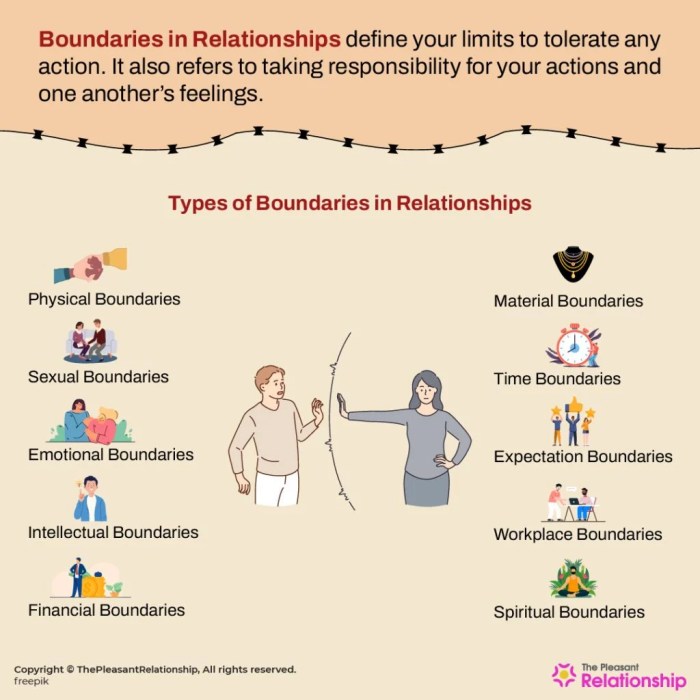
Relationship Boundaries Setting Healthy Limits for Better Connections

Boundaries relationships intellectual stronger bonobology

Embark on a journey exploring the importance of Relationship boundaries, crucial for fostering healthy dynamics and strong connections.

From understanding different types of boundaries to setting them effectively, this topic delves into the essence of maintaining respectful relationships.

Relationships

In relationships, boundaries play a crucial role in maintaining healthy dynamics and fostering mutual respect. Without clear boundaries, misunderstandings, conflicts, and even emotional harm can arise. Let’s explore the importance of setting boundaries in different types of relationships and how to communicate them effectively.

Examples of Different Types of Relationships where Boundaries are Important

  • Family Relationships: Setting boundaries with family members can help maintain individual autonomy and prevent enmeshment.
  • Romantic Relationships: Establishing boundaries around personal space, communication, and expectations can ensure a healthy and balanced partnership.
  • Friendships: Clear boundaries in friendships help in respecting each other’s time, emotions, and values.
  • Professional Relationships: Boundaries at work are essential for maintaining professionalism and preventing conflicts of interest.

Importance of Setting Boundaries in Relationships

Setting boundaries in relationships is crucial as it helps in:

  • Respecting individual needs and preferences.
  • Preventing misunderstandings and conflicts.
  • Promoting emotional well-being and self-care.
  • Fostering mutual trust and respect.

Comparison of Relationships with Strong versus Weak Boundaries

Relationships with strong boundaries tend to be healthier, more respectful, and less prone to conflicts. On the other hand, relationships with weak boundaries may suffer from issues like codependency, lack of respect, and emotional manipulation.

Tips on Communicating and Establishing Boundaries Effectively

  • Be clear and specific about your boundaries.
  • Communicate assertively and respectfully.
  • Listen actively to the boundaries of others.
  • Reinforce boundaries consistently and enforce consequences when needed.
  • Seek support from a therapist or counselor if you struggle with setting boundaries.

Types of Relationship Boundaries

Boundaries relationships intellectual stronger bonobology

Establishing boundaries in relationships is crucial for maintaining healthy dynamics and fostering mutual respect. Different types of boundaries exist, including emotional, physical, time, and more. These boundaries can vary depending on the nature of the relationship, whether it is romantic, familial, or a friendship. Setting clear boundaries helps individuals feel respected and understood, leading to stronger connections.

Emotional Boundaries

Emotional boundaries involve understanding and respecting each other’s feelings, thoughts, and personal space. It is essential to communicate openly about emotions without judgment or criticism. For example, in a romantic relationship, partners may establish boundaries around discussing past relationships to avoid triggering jealousy or insecurity.

Physical Boundaries

Physical boundaries encompass personal space, touch, and intimacy levels. It is vital to establish comfort levels regarding physical contact and respect each other’s boundaries. For instance, in a friendship, setting boundaries around personal space can prevent misunderstandings and discomfort.

Time Boundaries

Time boundaries revolve around respecting each other’s schedules, priorities, and availability. Establishing clear expectations about time commitments can prevent misunderstandings and conflicts. In a familial relationship, setting boundaries around personal time can help individuals balance family responsibilities with self-care.

Professional Boundaries

In professional relationships, boundaries are essential to maintain professionalism, respect, and ethical conduct. Clear boundaries can prevent conflicts of interest and ensure a healthy work environment. For example, in a boss-employee relationship, setting boundaries around personal discussions at work can maintain a professional atmosphere.

Scenarios of Improved Relationships

Setting clear boundaries in relationships can lead to positive outcomes. For instance, a couple who establishes emotional boundaries around communication may experience improved trust and understanding. Similarly, friends who respect each other’s physical boundaries can strengthen their bond and avoid discomfort.

Boundary Violations

Boundary violations occur when one person disregards or crosses another’s established boundaries. This can lead to feelings of betrayal, resentment, and mistrust. It is crucial to address boundary violations promptly and communicate openly to prevent further harm to the relationship.

Setting Boundaries in Relationships

Setting boundaries in relationships is crucial for establishing healthy dynamics and ensuring mutual respect. Here is a step-by-step guide on how to set boundaries in a new relationship:

Step-by-Step Guide to Setting Boundaries in a New Relationship

  • Reflect on Your Needs: Take time to identify your own needs, values, and limits before communicating them to your partner.
  • Communicate Clearly: Express your boundaries in a clear and direct manner, using “I” statements to avoid sounding accusatory.
  • Listen and Validate: Be open to hearing your partner’s perspective and validate their feelings, even if they differ from yours.
  • Set Consequences: Clearly communicate the consequences of crossing boundaries, and be prepared to enforce them if necessary.
  • Revisit and Adjust: Regularly revisit and adjust boundaries as the relationship evolves, ensuring they continue to meet both partners’ needs.

Challenges in Setting Boundaries in Relationships

Individuals may face various challenges when trying to set boundaries in relationships, including:

  • Fear of Conflict: Some people avoid setting boundaries to prevent conflict or rejection.
  • Guilt or Obligation: Feelings of guilt or obligation can make it challenging to assert boundaries.
  • External Influences: External pressures from family, friends, or societal norms may influence boundary-setting decisions.

Examples of Healthy Boundaries in Different Types of Relationships

Healthy boundaries can vary depending on the type of relationship. Here are some examples:

Relationship Type Example of Healthy Boundary
Friendship Setting limits on how often you are available to hang out to prioritize self-care.
Romantic Relationship Establishing personal space boundaries to maintain individual identities within the relationship.
Family Communicating expectations for respect and boundaries within family interactions.

Cultural and Societal Influences on Boundary-Setting

Cultural and societal norms can significantly impact how individuals perceive and establish boundaries in relationships. These influences may include:

Expectations for gender roles, communication styles, and values related to personal space and privacy.

Boundaries and Self-Care

Setting boundaries in relationships is closely tied to the practice of self-care. When individuals establish and enforce their boundaries, they are essentially prioritizing their own needs and well-being. This act of self-respect can have profound effects on mental health and overall wellness.

Respecting Personal Boundaries for Better Mental Health

  • Respecting personal boundaries is a form of self-respect that can lead to improved mental health outcomes.
  • By setting boundaries, individuals communicate their needs and limits, reducing feelings of resentment or being overwhelmed.
  • When personal boundaries are upheld, individuals are more likely to experience a sense of control and autonomy in their relationships.

Maintaining Identity Through Boundaries

  • Boundaries help individuals define their own identity separate from their relationships.
  • By setting and maintaining boundaries, individuals can prevent their sense of self from being overshadowed by others.
  • Healthy boundaries allow individuals to prioritize their values, beliefs, and interests, contributing to a strong sense of self.

Recognizing and Addressing Boundary Crossings

  • It is important to be aware of signs that indicate when boundaries are being crossed in a relationship.
  • Feelings of discomfort, resentment, or violation may indicate that a boundary has been breached.
  • When boundaries are crossed, it is crucial to communicate assertively and express one’s needs and limits clearly.
  • Establishing consequences for boundary violations can help reinforce the importance of respecting personal boundaries.

As we conclude, remember that clear boundaries are the cornerstone of any thriving relationship, ensuring mutual respect and understanding for a fulfilling connection.

Clarifying Questions

How can setting boundaries improve relationships?

Setting boundaries helps establish mutual respect and fosters healthier dynamics by clearly defining individual needs and limits.

What are some common challenges in setting boundaries?

Some challenges include fear of conflict, guilt for asserting needs, and concerns about being perceived as selfish.

How do boundaries contribute to self-care?

Boundaries play a vital role in self-care by promoting mental well-being, preserving personal identity, and preventing emotional burnout.