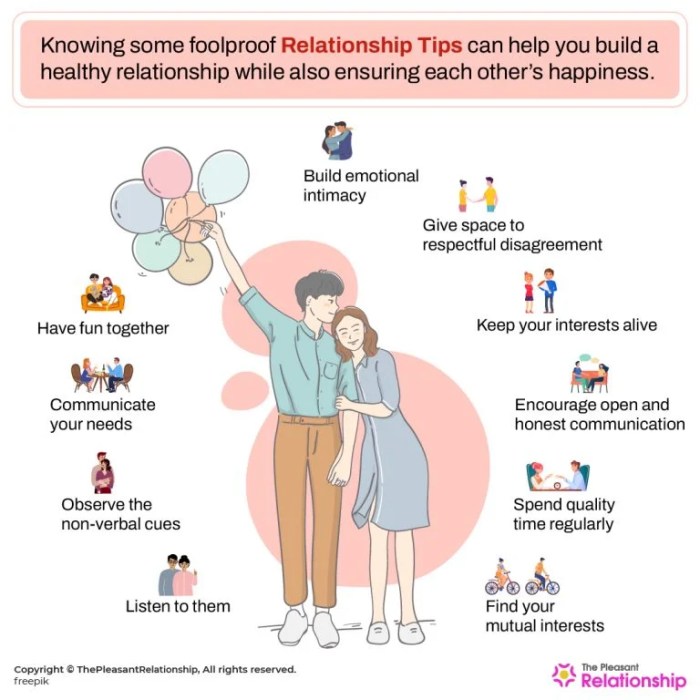
Embark on a journey into the realm of Relationship Goals, exploring their importance, impact, and strategies for success. Dive into the world of setting and achieving goals in romantic partnerships.
Discover the key aspects of different types of relationship goals, from communication to personal growth, and how they can strengthen the bond between partners.
Relationship Goals
Relationship goals refer to the specific aspirations, ambitions, and milestones that individuals or couples set in their romantic relationships to strengthen their bond, enhance communication, and foster mutual growth. In modern relationships, setting relationship goals has become increasingly significant as it allows partners to align their values, expectations, and visions for the future.
Examples of Common Relationship Goals
- Improving communication: Setting a goal to communicate openly, honestly, and effectively to avoid misunderstandings and conflicts.
- Quality time together: Making an effort to spend quality time with each other regularly to nurture the relationship and create lasting memories.
- Supporting each other’s goals: Encouraging and supporting each other in pursuing personal and professional goals to foster mutual growth and success.
- Building trust: Working towards building trust and transparency in the relationship by being reliable, honest, and accountable.
- Planning for the future: Setting goals related to future plans such as marriage, children, career advancements, or shared experiences to ensure alignment in long-term aspirations.
Impact of Setting and Achieving Relationship Goals
Setting and achieving relationship goals can have a profound impact on the overall quality of a relationship. By setting clear goals and working towards them together, partners can strengthen their emotional connection, deepen their intimacy, and build a strong foundation of trust and mutual respect. Achieving relationship goals can also foster a sense of accomplishment, satisfaction, and fulfillment, leading to a happier and more fulfilling partnership.
Types of Relationship Goals
Setting relationship goals is essential for strengthening the bond between partners. By focusing on different categories such as communication, intimacy, trust, and personal growth, couples can work towards a healthier and more fulfilling relationship.
Communication
Effective communication is key to any successful relationship. Setting goals to improve communication skills, such as active listening and open dialogue, can help partners understand each other better and resolve conflicts more effectively.
Intimacy
Intimacy goes beyond physical affection and includes emotional connection and vulnerability. Couples can set goals to deepen their emotional intimacy, such as sharing thoughts and feelings openly or creating quality time together without distractions.
Trust
Trust is the foundation of a strong relationship. Setting goals to build trust, such as being honest and reliable, can create a secure and stable foundation for the partnership to thrive.
Personal Growth
Individual growth plays a crucial role in a relationship. Couples can set goals to support each other’s personal development, whether it’s pursuing new hobbies, career aspirations, or self-improvement goals.
Short-term vs. Long-term Goals
Short-term relationship goals focus on immediate improvements in the relationship, such as resolving conflicts or improving communication. Long-term goals, on the other hand, aim to build a lasting and fulfilling partnership, such as planning for the future together or supporting each other’s long-term aspirations.
Strategies for Achieving Relationship Goals
When it comes to working together towards achieving relationship goals, there are several effective strategies and tips that couples can implement to strengthen their bond and move forward in a positive direction.
Importance of Communication
Effective communication is key in any relationship. Couples should prioritize open and honest communication to express their needs, feelings, and expectations. Listening actively and showing empathy towards each other’s perspective can help in resolving conflicts and building a stronger connection.
Practice Compromise
Compromise plays a crucial role in achieving relationship goals. Both partners need to be willing to make sacrifices and find common ground on various issues. Being flexible and understanding each other’s point of view can lead to a harmonious and fulfilling relationship.
Offer Mutual Support
Supporting each other through both the ups and downs is essential for a successful relationship. Celebrating each other’s achievements and providing comfort during challenging times can create a sense of security and trust. Being each other’s biggest cheerleader can strengthen the bond between partners.
Healthy Habits and Behaviors
- Regularly expressing appreciation and gratitude towards one another.
- Setting aside quality time for each other and engaging in activities that both partners enjoy.
- Showing affection through physical touch, words of affirmation, and acts of service.
- Being patient, understanding, and forgiving towards each other’s mistakes.
Relationship Milestones vs. Relationship Goals
When it comes to relationships, milestones and goals play different but interconnected roles in shaping the journey of a couple. While relationship milestones are significant events or achievements that mark progress in a relationship, relationship goals are specific objectives that a couple sets to improve their relationship over time.
Differentiate between Relationship Milestones and Relationship Goals
- Relationship milestones are major events or achievements in a relationship, such as getting married, buying a house, or having a child. These milestones are often seen as important markers of progress and commitment in a relationship.
- Relationship goals, on the other hand, are specific objectives that a couple sets to enhance their relationship. These goals can be related to communication, intimacy, financial matters, or any other aspect of the relationship that the couple wants to work on.
Explore how Relationship Milestones Influence Setting Relationship Goals
- Relationship milestones can influence the setting of relationship goals by providing a roadmap for the couple to follow. For example, after getting married, a couple may set a goal to travel to a new destination every year to strengthen their bond.
- By achieving relationship milestones, couples can gain insights into their strengths and areas for improvement, which can help them set more realistic and meaningful relationship goals.
Discuss the Role of Celebrating Milestones in Maintaining Motivation for Achieving Relationship Goals
- Celebrating relationship milestones can create a sense of accomplishment and joy, which can motivate couples to continue working towards their relationship goals.
- Recognizing and celebrating milestones can also strengthen the bond between partners, fostering a sense of teamwork and unity that can be carried forward in pursuing future relationship goals.
As we conclude our exploration of Relationship Goals, remember the significance of milestones, effective strategies, and healthy habits in maintaining a thriving relationship. Cheers to setting, achieving, and celebrating success together!
FAQ Insights
What are some examples of common relationship goals?
Common relationship goals include improving communication, building trust, fostering intimacy, and supporting each other’s personal growth.
How can couples effectively work towards achieving their relationship goals?
Couples can work towards their relationship goals by maintaining open communication, practicing compromise, offering mutual support, and cultivating healthy habits together.