Love languages sets the stage for this enthralling narrative, offering readers a glimpse into a story that is rich in detail with casual formal language style and brimming with originality from the outset.
Love languages play a crucial role in understanding how people give and receive love, influencing the dynamics of relationships in profound ways. This article explores the concept of love languages, delving into the five types identified by Gary Chapman and how they can be applied to enhance connections with loved ones.
Love Languages
Love languages refer to the different ways people express and receive love. Understanding love languages can help individuals communicate their affection more effectively and strengthen their relationships.
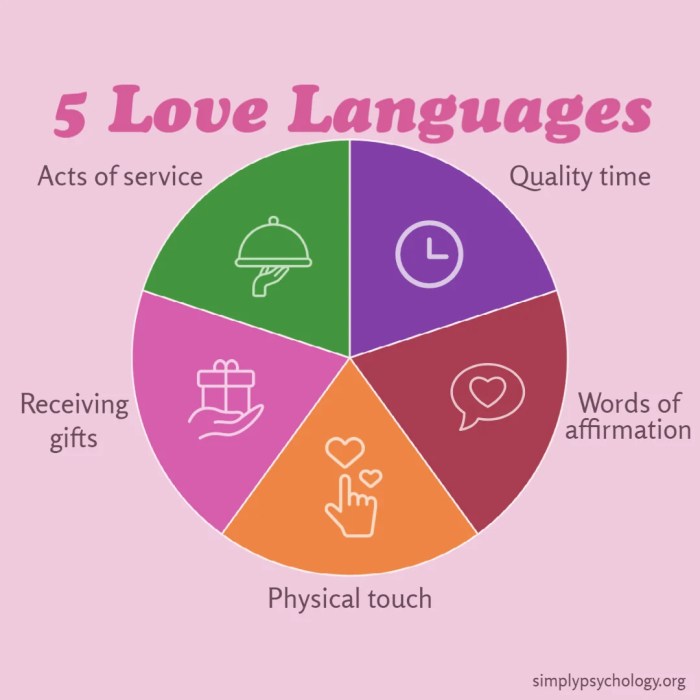
The Five Love Languages by Gary Chapman
- Words of Affirmation: Expressing love through verbal compliments, encouragement, and kind words.
- Acts of Service: Showing love by performing thoughtful gestures and actions for your partner.
- Receiving Gifts: Feeling loved through the giving and receiving of tangible items as symbols of affection.
- Quality Time: Spending meaningful and focused time together to nurture the relationship.
- Physical Touch: Feeling loved through physical gestures like hugs, kisses, and holding hands.
Improving Relationships through Love Languages
Understanding your partner’s love language can lead to more effective communication and deeper emotional connections. By expressing love in ways that resonate with your partner, you can create a stronger bond and a more fulfilling relationship.
Examples of Love Languages in Relationships
- A partner whose love language is Acts of Service may feel most loved when their significant other helps with household chores without being asked.
- For someone whose love language is Quality Time, simply spending uninterrupted time together, such as going for a walk or having a meaningful conversation, can be incredibly meaningful.
- Individuals who value Words of Affirmation may appreciate hearing compliments and words of encouragement regularly to feel loved and appreciated.
- Those who respond to Physical Touch may feel the deepest connection through cuddling, holding hands, or other physical displays of affection.
- Receiving Gifts as a love language may involve thoughtful gestures like surprising your partner with their favorite treat or a small token of appreciation.
Types of Love Languages
Understanding the concept of love languages can greatly enhance communication and emotional connection in relationships. Gary Chapman identifies five primary love languages that individuals use to express and receive love.
Words of Affirmation
Words of affirmation involve verbal expressions of love and appreciation. This can include compliments, encouragement, and kind words that uplift and validate the other person.
Acts of Service
Acts of service entail doing helpful and considerate things for your partner. This could be anything from cooking a meal, running errands, or completing tasks to ease their burden.
Receiving Gifts
Receiving gifts involves the giving and receiving of physical tokens of love. These gifts can be big or small, and the thought and effort put into selecting them are what matter most.
Quality Time
Quality time is about giving your undivided attention to your partner. This means spending meaningful time together, engaging in activities, and having deep conversations to strengthen the bond.
Physical Touch
Physical touch includes non-verbal expressions of love such as hugs, kisses, holding hands, and other forms of physical affection. This love language emphasizes the power of touch in conveying love and support.
Each love language has its unique way of expressing and receiving love, and individuals may have a primary love language that resonates with them the most. To determine your primary love language, pay attention to how you naturally express love to others and how you prefer to receive love in return. Understanding your primary love language can help you communicate your needs effectively in a relationship and foster a deeper connection with your partner.
Importance in Relationships
Understanding love languages is crucial in relationships as it helps partners communicate their affection in a way that is meaningful to the other person. By knowing each other’s love languages, couples can strengthen their emotional connection and foster a deeper bond.
Misunderstandings Due to Mismatched Love Languages
Mismatched love languages can lead to misunderstandings and miscommunication in relationships. For example, if one partner expresses love through acts of service while the other values quality time together, they may not feel loved or appreciated despite the efforts. This can create tension and distance between partners.
Learning Each Other’s Love Languages
To learn each other’s love languages, partners can take the time to observe how the other person expresses love and what gestures or actions make them feel valued. Open communication and willingness to adapt to each other’s needs are key in understanding and incorporating love languages into the relationship.
Strengthening Relationships with Love Languages
Incorporating love languages into relationships can strengthen the emotional connection between partners. For instance, if one partner’s love language is words of affirmation, regularly expressing appreciation and affection through verbal affirmations can boost their self-esteem and deepen their bond. By recognizing and catering to each other’s love languages, couples can create a more fulfilling and harmonious relationship.
Applying Love Languages
Understanding and applying love languages in daily interactions can significantly improve relationships and deepen emotional connections. By speaking your partner’s love language, you show them love in a way that resonates with their heart.
Incorporating Love Languages in Daily Interactions
One practical way to apply love languages is by actively listening to your partner and observing their reactions to different gestures of love. Pay attention to what makes them feel appreciated and loved, and make an effort to incorporate those actions into your daily routine.
Success Stories of Couples Improving Relationships
- A couple who discovered their love languages through a relationship workshop started implementing small changes in their interactions. By expressing love in their partner’s preferred language, they saw a significant improvement in communication and intimacy.
- Another couple found that by understanding each other’s love languages, they were able to overcome misunderstandings and conflicts more effectively. This led to a stronger and more harmonious relationship.
Challenges in Communicating Love Through Different Languages
One common challenge when applying love languages is misinterpreting your partner’s actions or words due to differences in communication styles. It’s essential to have open and honest conversations to avoid misunderstandings and ensure that both partners feel loved and valued.
Practical Tips for Expressing Love
- Take the love languages quiz together to identify each other’s primary love languages.
- Make a conscious effort to express love in your partner’s preferred language, even if it doesn’t come naturally to you.
- Be patient and understanding as you navigate the process of learning to speak each other’s love languages fluently.
- Regularly check in with your partner to see if their emotional needs are being met through your expressions of love.
As we conclude this exploration of love languages, it becomes evident that these simple yet powerful concepts have the potential to transform relationships. By recognizing and incorporating each other’s love languages, individuals can build stronger, more fulfilling connections that stand the test of time.
Popular Questions
How can love languages impact relationships?
Understanding and speaking your partner’s love language can lead to deeper emotional connections and more meaningful interactions.
Can someone have more than one primary love language?
While individuals may resonate with multiple love languages, there is usually one that stands out as the primary way they prefer to receive love.
What if my partner and I have different primary love languages?
Recognizing and respecting each other’s love languages can bridge the gap and create a stronger bond, even if they differ.