Relationship stages Navigating the Journey of Love

Stages relationships changes relationship stage love steps power getting parents life understanding find acceptance better mutual struggle showing reality

Embark on a journey through the intricate phases of relationships with Relationship stages at the helm, exploring the highs, lows, and everything in between.

Delve into the evolution of relationships, the challenges faced, and the keys to maintaining satisfaction as love blossoms and matures over time.

Relationship Stages

In a typical romantic relationship, there are several stages that couples often go through as they grow and evolve together.

Dating vs. Marriage Progression

When comparing the progression of relationship stages in dating versus marriage, we can see that dating tends to have stages like the initial attraction, getting to know each other, exclusivity, and then potentially moving towards marriage. In marriage, the stages may involve the honeymoon phase, settling into routines, facing challenges together, and potentially growing old together.

Challenges in Each Stage

  • Initial Attraction: Couples may face challenges related to communication, trust, and understanding each other’s boundaries.
  • Getting to Know Each Other: Challenges may include navigating differences in values, beliefs, and lifestyles.
  • Exclusivity: Couples might struggle with commitment issues, jealousy, or insecurity.
  • Marriage: Challenges can range from financial stress, conflicts in priorities, to maintaining intimacy and connection.

Milestones in Relationship Stages

  • First Date: The first date often marks the beginning of a romantic relationship.
  • Meeting the Family: Introducing your partner to your family is a significant milestone that shows commitment and seriousness.
  • Getting Engaged: This milestone signifies the decision to move towards marriage and solidify the relationship.
  • Buying a Home Together: Sharing a living space and making joint decisions about a home is a milestone that signifies long-term commitment.

Relationship Development

Relationships evolve and mature over time as individuals grow, change, and adapt to each other’s needs and desires. It is a dynamic process that requires effort, understanding, and communication to navigate through different stages.

The Role of Communication

Effective communication plays a crucial role in navigating through different relationship stages. It helps in expressing thoughts, feelings, and concerns openly and honestly. By communicating openly, partners can resolve conflicts, build trust, and strengthen their bond.

Strategies for Fostering Growth

  • Set goals together: Establish common goals and aspirations to work towards as a couple. This can create a sense of unity and purpose in the relationship.
  • Quality time: Spend quality time together engaging in activities that you both enjoy. This helps in creating memorable experiences and deepening your connection.
  • Continuous learning: Always strive to learn more about your partner and their needs. This shows that you value their individuality and are committed to their growth.
  • Seek help when needed: Don’t hesitate to seek professional help or counseling if you encounter challenges that seem insurmountable. A neutral third party can provide valuable insights and guidance.

Key Factors for Success

  • Trust: Trust is the foundation of a healthy relationship. Building and maintaining trust requires honesty, reliability, and consistency.
  • Respect: Respect your partner’s opinions, boundaries, and autonomy. Mutual respect fosters a sense of equality and appreciation in the relationship.
  • Empathy: Show empathy towards your partner’s feelings and experiences. Understanding their perspective and offering support can strengthen your emotional connection.
  • Flexibility: Be open to change and adapt to new circumstances together. Flexibility allows for growth and development as individuals and as a couple.

Relationship Challenges

Stages relationships changes relationship stage love steps power getting parents life understanding find acceptance better mutual struggle showing reality

Relationships can face various challenges at different stages, testing the strength and compatibility of partners. Overcoming these obstacles requires effective communication, understanding, and compromise.

Common Obstacles in Different Relationship Stages

  • In the initial stages of a relationship, couples may struggle with establishing trust and building a strong foundation.
  • During the commitment stage, challenges such as balancing individual freedom with shared responsibilities can arise.
  • In long-term relationships, issues like boredom, complacency, and changing priorities may challenge the couple’s bond.

Overcoming Communication Barriers

  • Practice active listening to understand your partner’s perspective without interruptions.
  • Use “I” statements to express feelings and avoid blame during conflicts.
  • Seek couples therapy or counseling to improve communication skills and resolve underlying issues.

Impact of External Influences

  • Family dynamics can influence relationship dynamics, leading to conflicts or misunderstandings.
  • Friends’ opinions and advice may create tension or affect decision-making within the relationship.
  • Work-related stress or time constraints can strain a relationship by limiting quality time together.

Conflicts and Resolutions in Each Relationship Stage

  • In the initial stage, conflicts may arise due to differences in expectations and communication styles. Resolving conflicts through open dialogue and compromise is crucial.
  • During the commitment stage, conflicts related to future goals and values may surface. Discussing priorities and finding common ground can lead to resolution.
  • In long-term relationships, conflicts over intimacy, communication, and life changes are common. Regular check-ins, seeking professional help when needed, and prioritizing the relationship can help overcome these challenges.

Relationship Satisfaction

Relationship satisfaction plays a crucial role in the success and longevity of a relationship. It is essential to understand how satisfaction levels evolve throughout the different stages of a relationship to maintain a healthy and fulfilling connection with your partner.

Importance of Individual Identities

While progressing through relationship stages, it is important for both partners to maintain their individual identities. This ensures that each person continues to grow personally and brings unique qualities to the relationship, enhancing overall satisfaction.

Tips for Boosting Relationship Satisfaction

  • Communicate openly and honestly with your partner to address any challenges or concerns. Transparency fosters trust and strengthens the bond between you.
  • Make time for quality moments together, whether it’s a date night, weekend getaway, or simply spending time doing activities you both enjoy.
  • Show appreciation and gratitude towards your partner regularly. Acknowledging their efforts and qualities can boost satisfaction and strengthen the emotional connection.
  • Seek support from a therapist or counselor if needed to navigate challenging stages and improve communication skills within the relationship.

Emotional Intimacy for Relationship Satisfaction

Emotional intimacy is a key component in fostering satisfaction at different relationship stages. This deep connection involves sharing feelings, thoughts, and vulnerabilities with your partner, creating a strong emotional bond that enhances overall satisfaction and closeness.

As we conclude this exploration of Relationship stages, remember that every bump in the road and triumph shared with a loved one contributes to the beautiful tapestry of a lasting relationship.

Query Resolution

How can couples overcome communication barriers during challenging relationship stages?

One effective way is to actively listen to each other, practice empathy, and seek to understand the other person’s perspective.

What role does emotional intimacy play in fostering satisfaction at different relationship stages?

Emotional intimacy creates a strong bond between partners, enhancing trust, connection, and overall satisfaction in the relationship.

Why is it important to maintain individual identities while progressing through relationship stages?

Preserving individuality allows partners to grow personally and bring unique strengths to the relationship, fostering a healthy balance.

Love Languages Understanding and Applying the Five Love Languages for Stronger Relationships

Languages love worksheet chapman gary coach la chessmuseum source

Love languages sets the stage for this enthralling narrative, offering readers a glimpse into a story that is rich in detail with casual formal language style and brimming with originality from the outset.

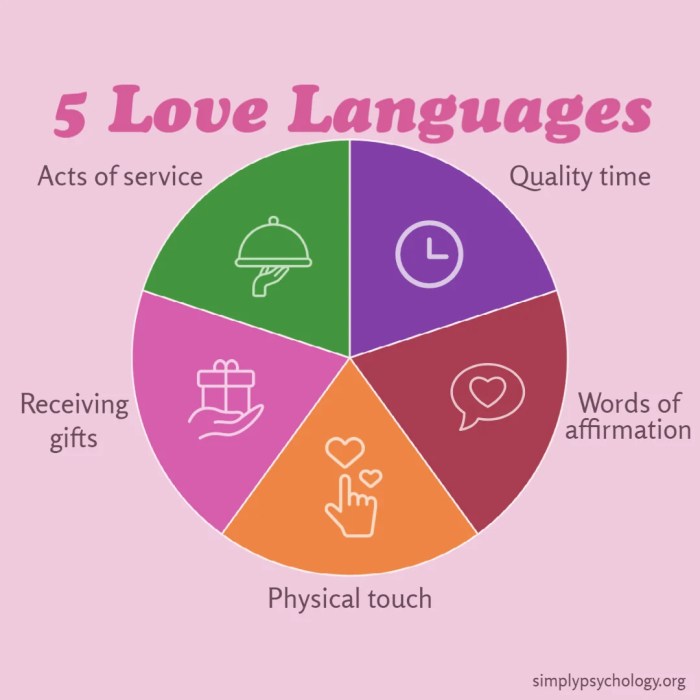
Love languages play a crucial role in understanding how people give and receive love, influencing the dynamics of relationships in profound ways. This article explores the concept of love languages, delving into the five types identified by Gary Chapman and how they can be applied to enhance connections with loved ones.

Love Languages

Love languages refer to the different ways people express and receive love. Understanding love languages can help individuals communicate their affection more effectively and strengthen their relationships.

The Five Love Languages by Gary Chapman

  • Words of Affirmation: Expressing love through verbal compliments, encouragement, and kind words.
  • Acts of Service: Showing love by performing thoughtful gestures and actions for your partner.
  • Receiving Gifts: Feeling loved through the giving and receiving of tangible items as symbols of affection.
  • Quality Time: Spending meaningful and focused time together to nurture the relationship.
  • Physical Touch: Feeling loved through physical gestures like hugs, kisses, and holding hands.

Improving Relationships through Love Languages

Understanding your partner’s love language can lead to more effective communication and deeper emotional connections. By expressing love in ways that resonate with your partner, you can create a stronger bond and a more fulfilling relationship.

Examples of Love Languages in Relationships

  • A partner whose love language is Acts of Service may feel most loved when their significant other helps with household chores without being asked.
  • For someone whose love language is Quality Time, simply spending uninterrupted time together, such as going for a walk or having a meaningful conversation, can be incredibly meaningful.
  • Individuals who value Words of Affirmation may appreciate hearing compliments and words of encouragement regularly to feel loved and appreciated.
  • Those who respond to Physical Touch may feel the deepest connection through cuddling, holding hands, or other physical displays of affection.
  • Receiving Gifts as a love language may involve thoughtful gestures like surprising your partner with their favorite treat or a small token of appreciation.

Types of Love Languages

Understanding the concept of love languages can greatly enhance communication and emotional connection in relationships. Gary Chapman identifies five primary love languages that individuals use to express and receive love.

Words of Affirmation

Words of affirmation involve verbal expressions of love and appreciation. This can include compliments, encouragement, and kind words that uplift and validate the other person.

Acts of Service

Acts of service entail doing helpful and considerate things for your partner. This could be anything from cooking a meal, running errands, or completing tasks to ease their burden.

Receiving Gifts

Receiving gifts involves the giving and receiving of physical tokens of love. These gifts can be big or small, and the thought and effort put into selecting them are what matter most.

Quality Time

Quality time is about giving your undivided attention to your partner. This means spending meaningful time together, engaging in activities, and having deep conversations to strengthen the bond.

Physical Touch

Physical touch includes non-verbal expressions of love such as hugs, kisses, holding hands, and other forms of physical affection. This love language emphasizes the power of touch in conveying love and support.

Each love language has its unique way of expressing and receiving love, and individuals may have a primary love language that resonates with them the most. To determine your primary love language, pay attention to how you naturally express love to others and how you prefer to receive love in return. Understanding your primary love language can help you communicate your needs effectively in a relationship and foster a deeper connection with your partner.

Importance in Relationships

Languages love worksheet chapman gary coach la chessmuseum source

Understanding love languages is crucial in relationships as it helps partners communicate their affection in a way that is meaningful to the other person. By knowing each other’s love languages, couples can strengthen their emotional connection and foster a deeper bond.

Misunderstandings Due to Mismatched Love Languages

Mismatched love languages can lead to misunderstandings and miscommunication in relationships. For example, if one partner expresses love through acts of service while the other values quality time together, they may not feel loved or appreciated despite the efforts. This can create tension and distance between partners.

Learning Each Other’s Love Languages

To learn each other’s love languages, partners can take the time to observe how the other person expresses love and what gestures or actions make them feel valued. Open communication and willingness to adapt to each other’s needs are key in understanding and incorporating love languages into the relationship.

Strengthening Relationships with Love Languages

Incorporating love languages into relationships can strengthen the emotional connection between partners. For instance, if one partner’s love language is words of affirmation, regularly expressing appreciation and affection through verbal affirmations can boost their self-esteem and deepen their bond. By recognizing and catering to each other’s love languages, couples can create a more fulfilling and harmonious relationship.

Applying Love Languages

Understanding and applying love languages in daily interactions can significantly improve relationships and deepen emotional connections. By speaking your partner’s love language, you show them love in a way that resonates with their heart.

Incorporating Love Languages in Daily Interactions

One practical way to apply love languages is by actively listening to your partner and observing their reactions to different gestures of love. Pay attention to what makes them feel appreciated and loved, and make an effort to incorporate those actions into your daily routine.

Success Stories of Couples Improving Relationships

  • A couple who discovered their love languages through a relationship workshop started implementing small changes in their interactions. By expressing love in their partner’s preferred language, they saw a significant improvement in communication and intimacy.
  • Another couple found that by understanding each other’s love languages, they were able to overcome misunderstandings and conflicts more effectively. This led to a stronger and more harmonious relationship.

Challenges in Communicating Love Through Different Languages

One common challenge when applying love languages is misinterpreting your partner’s actions or words due to differences in communication styles. It’s essential to have open and honest conversations to avoid misunderstandings and ensure that both partners feel loved and valued.

Practical Tips for Expressing Love

  1. Take the love languages quiz together to identify each other’s primary love languages.
  2. Make a conscious effort to express love in your partner’s preferred language, even if it doesn’t come naturally to you.
  3. Be patient and understanding as you navigate the process of learning to speak each other’s love languages fluently.
  4. Regularly check in with your partner to see if their emotional needs are being met through your expressions of love.

As we conclude this exploration of love languages, it becomes evident that these simple yet powerful concepts have the potential to transform relationships. By recognizing and incorporating each other’s love languages, individuals can build stronger, more fulfilling connections that stand the test of time.

Popular Questions

How can love languages impact relationships?

Understanding and speaking your partner’s love language can lead to deeper emotional connections and more meaningful interactions.

Can someone have more than one primary love language?

While individuals may resonate with multiple love languages, there is usually one that stands out as the primary way they prefer to receive love.

What if my partner and I have different primary love languages?

Recognizing and respecting each other’s love languages can bridge the gap and create a stronger bond, even if they differ.

Long-distance relationships Navigating Love Across Miles

Relationship

Embark on a journey through the complexities of long-distance relationships, exploring the challenges, benefits, and strategies that shape these unique bonds.

Delve into the intricacies of maintaining love across physical distance and the profound impact of technology on modern relationships.

Long-distance relationships

Long-distance relationships are romantic relationships where partners are geographically separated and are unable to meet frequently in person. This can be due to various reasons such as work, education, or family commitments that require them to be in different locations.

Challenges faced in long-distance relationships

  • Physical distance leading to feelings of loneliness and isolation.
  • Lack of physical intimacy and touch.
  • Communication barriers due to time zone differences.
  • Trust issues and insecurities arising from not being able to monitor partner’s activities.

Importance of communication in maintaining a long-distance relationship

Communication plays a crucial role in keeping a long-distance relationship strong and healthy. It helps in building trust, resolving conflicts, and staying connected emotionally. Regular and open communication can bridge the gap created by physical distance and ensure that both partners feel supported and understood.

Impact of technology on long-distance relationships

  • Technology has made it easier to stay in touch through video calls, messaging apps, and social media platforms.
  • Virtual dates and activities can be planned using online tools, helping couples feel connected despite the distance.
  • Monitoring each other’s daily activities through social media can sometimes lead to misunderstandings and trust issues.
  • Technology can also create a sense of dependency on constant communication, making it challenging to have personal space and time.

Advantages of long-distance relationships

Long-distance relationships come with their own set of advantages that can strengthen the bond between partners despite the physical distance separating them. Absence can indeed make the heart grow fonder in these relationships, leading to a deeper emotional connection.

Personal growth and independence

Long-distance relationships often provide individuals with the opportunity to focus on personal growth and independence. The distance allows partners to pursue their individual goals, hobbies, and interests without compromising their relationship. This independence can lead to a stronger sense of self and personal development, which can ultimately benefit the relationship in the long run.

Trust in the relationship

Trust is a crucial component of any relationship, and in long-distance relationships, it becomes even more important. The distance between partners requires a high level of trust and communication to maintain the connection. Building and maintaining trust in a long-distance relationship can strengthen the bond between partners and create a solid foundation for the future.

Strategies for maintaining a healthy long-distance relationship

Relationship

Maintaining a healthy long-distance relationship requires effort, commitment, and effective communication to bridge the physical gap between partners.

Tips for effective communication in a long-distance relationship

  • Establish regular communication schedules to stay connected and updated on each other’s lives.
  • Utilize various communication tools such as video calls, voice messages, and texts to maintain intimacy.
  • Be open and honest about your feelings, concerns, and expectations to avoid misunderstandings.
  • Practice active listening to understand your partner’s perspective and show empathy towards their emotions.

The significance of setting goals and expectations in long-distance relationships

Setting clear goals and expectations helps both partners align their priorities and work towards a common future, fostering trust and commitment in the relationship.

Ways to strengthen the emotional connection despite the physical distance

  • Engage in shared activities or hobbies virtually to create shared experiences and memories.
  • Surprise your partner with thoughtful gestures or gifts to show your love and appreciation.
  • Express gratitude and affection regularly to maintain the emotional bond between you and your partner.
  • Plan virtual date nights or activities to keep the romance alive and create special moments together.

The importance of planning visits and spending quality time together in long-distance relationships

Physical visits are crucial for strengthening the emotional connection and maintaining the bond between partners. Planning quality time together allows for deeper emotional intimacy and rekindles the spark in the relationship.

Relationships

Relationships are connections or bonds between individuals that involve emotional, physical, and sometimes even spiritual aspects. These connections can be romantic, platonic, familial, or professional in nature, and they play a crucial role in shaping our lives and well-being.

Types of Relationships

    There are various types of relationships that individuals can experience:

  • Romantic Relationships: Involving love, intimacy, and partnership.
  • Platonic Relationships: Based on friendship, mutual respect, and companionship.
  • Familial Relationships: Connected by blood or legal ties, such as parent-child or sibling relationships.
  • Professional Relationships: Formed in the workplace, focused on collaboration, mentorship, and networking.

Key Components of a Healthy Relationship

    A healthy and successful relationship typically involves the following key components:

  • Communication: Open, honest, and effective communication is essential for understanding each other’s needs and resolving conflicts.
  • Trust: Building trust through consistency, reliability, and integrity is crucial for a strong foundation in any relationship.
  • Respect: Mutual respect for each other’s feelings, boundaries, and individuality fosters a positive and supportive environment.
  • Empathy: Being able to understand and share the feelings of your partner promotes emotional connection and compassion.
  • Support: Offering encouragement, assistance, and encouragement during challenging times strengthens the bond between individuals.

Role of Boundaries and Respect

    Boundaries and respect are fundamental in maintaining a strong and healthy relationship:

  • Boundaries: Setting clear boundaries helps establish expectations, limits, and personal space within the relationship, promoting mutual understanding and respect.
  • Respect: Respecting each other’s boundaries, opinions, and decisions is essential for creating a harmonious and balanced dynamic.
  • Consent: Seeking and obtaining consent in all aspects of the relationship, whether physical, emotional, or social, demonstrates respect and consideration for your partner’s autonomy.

In conclusion, long-distance relationships require effort, communication, and trust to thrive, offering opportunities for personal growth and deeper connections beyond borders.

User Queries

What are the benefits of being in a long-distance relationship?

Long-distance relationships can foster independence, personal growth, and a stronger emotional bond.

How can couples manage communication effectively in a long-distance relationship?

Regular communication, setting aside dedicated time for each other, and being transparent are key to maintaining a healthy connection.

Dating Tips Effective Ways to Improve Your Dating Experience

Slideshare dating top mydearvalentine saved

Embark on a journey of self-discovery with Dating Tips, where we delve into the art of conversation, active listening, creating lasting impressions, and decoding body language in the realm of dating.

Dating Tips

Slideshare dating top mydearvalentine saved

Starting a conversation on a first date can be nerve-wracking, but it’s essential for building a connection. One effective way is to ask open-ended questions that encourage your date to share more about themselves. This shows genuine interest and keeps the conversation flowing smoothly.

Importance of Active Listening

Active listening is crucial during a date as it shows respect and interest in what your date is saying. Avoid interrupting and focus on what they are saying, responding appropriately to show you are engaged and attentive.

Tips for Creating a Good First Impression

  • Dress appropriately for the occasion, showing that you put effort into your appearance.
  • Be punctual and respectful of your date’s time.
  • Maintain good eye contact and offer a warm smile to make your date feel comfortable and welcomed.

Significance of Body Language in Dating

Body language plays a significant role in dating as it can convey interest, attraction, and confidence. Ensure your body language is open and inviting, avoiding crossed arms or fidgeting. Maintaining good posture and mirroring your date’s body language can also create a sense of connection and rapport.

Relationship Advice

Building a successful relationship requires a combination of key qualities and strategies to navigate challenges and strengthen the bond between partners.

  • Communication: Open, honest communication is essential for understanding each other’s needs and resolving conflicts effectively.
  • Trust: Trust forms the foundation of a healthy relationship, fostering security and emotional connection between partners.
  • Respect: Mutual respect for each other’s feelings, opinions, and boundaries is crucial in maintaining a supportive and harmonious partnership.
  • Empathy: Being able to empathize with your partner’s emotions and experiences helps in building a deeper connection and showing care and understanding.

Maintaining Personal Space and Quality Time Together

Finding a balance between personal space and spending quality time together is vital for a healthy relationship. It allows for individual growth while nurturing the bond between partners.

  • Set boundaries: Establishing boundaries and respecting each other’s need for personal time can prevent feelings of suffocation and maintain independence within the relationship.
  • Schedule dates: Plan regular date nights or activities to bond and create lasting memories together, strengthening the emotional connection.
  • Communicate openly: Discuss your needs for personal space and quality time with your partner to find a balance that works for both of you.

Resolving Conflicts Peacefully

Conflicts are a natural part of any relationship, but how they are resolved can make a significant difference in the health of the partnership.

  • Active listening: Listen attentively to your partner’s perspective without interrupting, showing empathy and understanding for their feelings.
  • Use “I” statements: Express your feelings and concerns using “I” statements to avoid blame and encourage constructive dialogue.
  • Seek compromise: Find solutions that meet both partners’ needs and involve a willingness to compromise and find common ground.

The Importance of Trust and Communication

Trust and communication are the pillars of a strong and enduring relationship, fostering intimacy and connection between partners.

  • Be honest: Communicate openly and honestly with your partner, sharing your thoughts, feelings, and concerns without fear of judgment.
  • Build trust: Demonstrate reliability and consistency in your actions to build trust and strengthen the emotional bond between you and your partner.
  • Resolve conflicts respectfully: Approach conflicts with a focus on understanding and resolution, rather than winning or placing blame, to maintain trust and respect in the relationship.

In conclusion, mastering these dating tips can elevate your dating game to new heights, paving the way for meaningful connections and potential love interests.

Questions and Answers

How can I start a conversation on a first date?

To start a conversation on a first date, ask open-ended questions, show genuine interest, and actively listen to your date’s responses.

What are some tips for creating a good first impression?

To create a good first impression, dress appropriately, maintain good hygiene, exude confidence, and show respect towards your date.

Why is active listening important during a date?

Active listening is crucial during a date as it shows that you are attentive, interested, and value what your date has to say.