Self-love and relationships Nurturing Love Within and Outside

Yourself relationship powerofpositivity

Embark on a journey exploring the intertwined realms of self-love and relationships, where the essence of nurturing oneself reflects in the connections we form with others.

Discover how self-love serves as the cornerstone for fostering healthy and fulfilling relationships, as we delve into the significance of self-esteem, setting boundaries, effective communication, and prioritizing self-care.

Self-love

Self-love plays a crucial role in maintaining healthy and fulfilling relationships. When individuals prioritize self-love, they are better equipped to give and receive love in their relationships.

Importance of Self-love in Relationships

Self-love serves as the foundation for all other types of love. When individuals have a healthy sense of self-worth and self-respect, they are more likely to establish boundaries, communicate effectively, and show empathy towards their partners.

Examples of How Practicing Self-love Can Positively Impact Relationships

  • Increased Confidence: Embracing self-love can boost confidence levels, allowing individuals to feel secure in themselves and their relationships.
  • Healthy Boundaries: Practicing self-love helps individuals set and maintain healthy boundaries in relationships, promoting mutual respect and understanding.
  • Enhanced Communication: Self-love encourages open and honest communication, leading to deeper connections and stronger emotional intimacy.

Strategies for Cultivating Self-love While in a Relationship

  • Self-care Routine: Engage in activities that promote self-care and self-compassion, such as meditation, exercise, or hobbies that bring joy.
  • Positive Affirmations: Practice positive self-talk and affirmations to boost self-esteem and reinforce a sense of self-worth.
  • Setting Boundaries: Clearly communicate your needs and boundaries to your partner, ensuring that both individuals feel respected and valued in the relationship.

Building Self-esteem

Yourself relationship powerofpositivity

Building self-esteem is crucial for healthy relationships as it directly impacts how we perceive ourselves and interact with others. When individuals have high self-esteem, they are more likely to set boundaries, communicate effectively, and make decisions that are in line with their values. On the other hand, low self-esteem can lead to feelings of inadequacy, dependency on others for validation, and difficulty asserting one’s needs in a relationship.

Ways to Boost Self-esteem in Relationships

  • Practice self-care: Taking care of your physical, emotional, and mental well-being can boost self-esteem. This includes setting aside time for activities you enjoy, getting enough rest, and seeking support when needed.
  • Challenge negative self-talk: Replace self-critical thoughts with more positive and affirming statements. Acknowledge your strengths and accomplishments, no matter how small they may seem.
  • Set boundaries: Clearly communicate your needs and limits to others. Respecting your boundaries and standing up for yourself can help reinforce feelings of self-worth.
  • Seek therapy or counseling: Working with a professional can help you explore underlying issues that contribute to low self-esteem and develop healthier coping mechanisms.

Effects of High vs. Low Self-esteem on Relationship Dynamics

  • High self-esteem: Individuals with high self-esteem are more likely to have fulfilling and balanced relationships. They are able to express themselves authentically, offer support to their partners, and navigate conflicts constructively.
  • Low self-esteem: On the other hand, individuals with low self-esteem may struggle with feelings of insecurity, jealousy, and fear of abandonment in relationships. This can lead to dependency on their partner for validation and approval, creating an imbalance in the relationship.

Setting Boundaries

Setting boundaries plays a crucial role in both self-love and relationships. It involves establishing clear limits and guidelines for what is acceptable and unacceptable behavior, helping individuals maintain their self-respect and protect their emotional well-being in any relationship.When it comes to relationships, setting healthy boundaries is essential for fostering mutual respect, trust, and understanding between partners. It allows individuals to communicate their needs, desires, and limits effectively, creating a safe and supportive environment for both parties to thrive.

By setting boundaries, individuals can ensure that their values are respected, their autonomy is preserved, and their emotional boundaries are not violated.

Examples of Healthy Boundaries in a Relationship

  • Communicating openly and honestly about feelings and expectations
  • Respecting each other’s personal space and alone time
  • Setting limits on acceptable behavior and addressing any violations promptly
  • Establishing boundaries around finances, communication, and decision-making
  • Prioritizing self-care and individual growth without feeling guilty

How Setting Boundaries Contributes to a Healthier Relationship Dynamic

Setting boundaries contributes to a healthier relationship dynamic by promoting mutual respect, trust, and emotional well-being. It allows individuals to express their needs and preferences without fear of judgment or rejection, fostering open and honest communication between partners. When both parties respect and honor each other’s boundaries, it creates a foundation of trust and understanding that strengthens the relationship over time.

Ultimately, setting boundaries helps maintain a healthy balance of independence and togetherness, ensuring that both individuals feel valued, supported, and empowered in the relationship.

Communication

Effective communication plays a crucial role in self-love as it involves expressing your needs, emotions, and boundaries clearly and assertively. When you communicate effectively, you are showing yourself love by advocating for your own well-being and ensuring that your voice is heard and respected.

Importance of Open Communication in Relationships

Open communication is essential in maintaining healthy relationships as it fosters trust, understanding, and emotional intimacy between partners. By openly expressing your thoughts, feelings, and concerns, you create a safe space for both you and your partner to share openly and honestly. This transparency helps to prevent misunderstandings, build stronger connections, and resolve conflicts in a constructive manner.

  • Listen actively: Practice active listening by giving your partner your full attention, showing empathy, and validating their feelings.
  • Express yourself clearly: Use “I” statements to communicate your feelings and needs without blaming or accusing your partner.
  • Be honest and transparent: Share your thoughts and emotions openly, even if they are difficult or uncomfortable.
  • Respect boundaries: Understand and respect each other’s boundaries, and communicate openly about what is acceptable and what is not.
  • Seek feedback: Encourage open feedback from your partner and be willing to make adjustments to improve communication and strengthen your relationship.

Prioritizing Self-care

When it comes to self-love, prioritizing self-care is essential. Self-care practices are a way to show love and respect for oneself, which in turn boosts self-esteem and overall well-being.

Examples of Self-care Activities

  • Engaging in regular exercise to take care of your physical health.
  • Setting aside time for hobbies and activities that bring you joy and relaxation.
  • Practicing mindfulness and meditation to nurture your mental and emotional well-being.
  • Getting enough rest and quality sleep to recharge your body and mind.
  • Eating nutritious meals and staying hydrated to fuel your body and promote overall health.

Impact of Prioritizing Self-care on Relationship Well-being

Prioritizing self-care not only benefits you individually but also has a positive impact on your relationships. When you take care of yourself, you are better equipped to show up fully in your relationships, communicate effectively, and set healthy boundaries. This leads to stronger, more fulfilling connections with others based on mutual respect and understanding.

As we conclude our discussion, remember that embracing self-love not only enriches your individual well-being but also enhances the quality of your relationships, nurturing a harmonious balance between self-fulfillment and meaningful connections.

Commonly Asked Questions

How can self-love impact relationships?

Self-love forms the foundation for healthy relationships by fostering self-respect and emotional well-being, leading to more authentic connections with others.

What are some examples of healthy boundaries in a relationship?

Healthy boundaries in a relationship include open communication, mutual respect, individual autonomy, and setting limits on behavior that is unacceptable or harmful.

How does prioritizing self-care affect relationship well-being?

By prioritizing self-care, individuals are better equipped to nurture themselves emotionally and physically, which in turn leads to more resilient and fulfilling relationships.

Relationship Compatibility Understanding, Assessing, and Nurturing Strong Connections

Compatibility relationship personality types infographic mbti match infp traits type chart intp istj romantic infj matches briggs esfj entp myers

Embark on a journey through the intricacies of Relationship Compatibility, delving into its importance and the various types that shape our connections with others.

Explore the factors that contribute to successful relationships and how compatibility differs from chemistry, setting the stage for a deeper exploration of this fundamental aspect of human connection.

Relationship Compatibility

Relationship compatibility refers to the harmony and connection between two individuals in a romantic relationship. It involves shared values, beliefs, goals, and a mutual understanding of each other’s needs and desires.

Factors Contributing to Relationship Compatibility

  • Communication: Open and honest communication is essential for understanding each other and resolving conflicts.
  • Shared Values: Having similar beliefs, morals, and priorities can strengthen the bond between partners.
  • Respect: Mutual respect for each other’s boundaries, opinions, and feelings is crucial for a healthy relationship.
  • Emotional Intelligence: The ability to empathize, listen, and express emotions constructively plays a significant role in relationship compatibility.

The Importance of Relationship Compatibility

Relationship compatibility is vital for the longevity and happiness of a partnership. When two individuals are compatible, they are more likely to navigate challenges together, support each other’s growth, and experience a deep sense of connection.

Compatibility Versus Chemistry

While compatibility focuses on shared values, goals, and communication, chemistry is more about the spark and attraction between partners. While chemistry can initially draw two people together, compatibility is what sustains a relationship in the long run.

Types of Compatibility

Compatibility in relationships can come in various forms, influencing how two individuals connect and interact with each other. These different types of compatibility play a crucial role in the dynamics of a relationship, shaping its overall success and longevity.

Emotional Compatibility

Emotional compatibility refers to the ability of two individuals to understand, support, and empathize with each other’s feelings. When partners are emotionally compatible, they can communicate effectively, express vulnerability, and provide comfort during challenging times. This type of compatibility fosters a deep emotional bond and strengthens the foundation of the relationship.

Intellectual Compatibility

Intellectual compatibility involves shared interests, values, and intellectual pursuits between partners. When individuals are intellectually compatible, they engage in stimulating conversations, exchange ideas, and challenge each other intellectually. This type of compatibility promotes growth, mutual respect, and a sense of intellectual fulfillment within the relationship.

Physical Compatibility

Physical compatibility pertains to the level of attraction, chemistry, and intimacy between partners. This type of compatibility encompasses both sexual and non-sexual physical interactions, such as cuddling, holding hands, or simply being close to each other. Physical compatibility enhances the romantic connection and intimacy in a relationship, fostering a sense of closeness and passion.

Communication Compatibility

Communication compatibility focuses on how effectively partners communicate with each other, resolve conflicts, and express their thoughts and feelings. When individuals are communication compatible, they listen attentively, communicate openly and honestly, and understand each other’s perspectives. This type of compatibility builds trust, promotes transparency, and strengthens the overall communication dynamics in the relationship.

Assessing Compatibility

Assessing compatibility with a partner is crucial for a successful relationship. It involves understanding each other’s values, beliefs, communication styles, and goals to ensure a harmonious connection.

Methods to Assess Compatibility

  • Take the time to have open and honest conversations about important topics such as family, finances, and future plans.
  • Pay attention to how you both handle conflict and disagreements, as this can indicate how well you work together to resolve issues.
  • Observe how you both interact with each other’s friends and family, as compatibility extends beyond just the two of you.
  • Consider seeking the advice of a relationship counselor or therapist to gain insights into your compatibility and how to improve it.

Tips on Navigating Differences in Compatibility

  • Focus on compromise and finding common ground when facing differences in compatibility.
  • Respect each other’s individuality and unique traits, understanding that differences can complement each other.
  • Communicate openly and respectfully about your concerns and work together to find solutions that benefit both partners.
  • Embrace the idea of growth and change, as individuals and relationships evolve over time, leading to new levels of compatibility.

The Role of Communication in Determining Relationship Compatibility

Communication is the cornerstone of a healthy relationship and plays a vital role in determining compatibility. By openly expressing thoughts, feelings, and needs, partners can build understanding, trust, and intimacy. Effective communication allows couples to navigate differences, resolve conflicts, and strengthen their bond. It is essential to listen actively, show empathy, and be willing to compromise to foster a deeper connection and enhance compatibility in a relationship.

Long-term Compatibility

Compatibility relationship personality types infographic mbti match infp traits type chart intp istj romantic infj matches briggs esfj entp myers

When it comes to evaluating long-term compatibility with a partner, it is essential to consider various factors that can impact the sustainability of the relationship over time.

Values and Goals Impact

One of the key aspects that influence long-term compatibility is the alignment of values and goals between partners. Shared values such as honesty, trust, respect, and similar long-term goals like starting a family, career aspirations, and lifestyle preferences play a significant role in determining the success of a relationship.

Maintaining Compatibility Strategies

  • Open Communication: Regular and honest communication is crucial for maintaining compatibility as the relationship evolves. Discussing concerns, aspirations, and goals openly can help partners stay connected.
  • Respect Individuality: While shared values are important, it is also essential to respect each other’s individuality and differences. Embracing each other’s uniqueness can strengthen the bond over time.
  • Adaptability: Being adaptable and flexible in accommodating changes and challenges that may arise in the relationship is vital for long-term compatibility. Both partners should be willing to adjust and compromise when needed.
  • Cultivate Shared Experiences: Creating and nurturing shared experiences, hobbies, and interests can help strengthen the emotional connection between partners and foster a sense of togetherness.

Compatibility in Different Relationship Dynamics

Understanding compatibility in various types of relationships is crucial for fostering healthy connections.

Friendships

Friendships thrive on compatibility, where shared values, interests, and communication styles play a significant role in maintaining strong bonds.

  • Shared interests lead to engaging conversations and enjoyable activities.
  • Mutual respect and understanding form the foundation of a lasting friendship.
  • Compatibility in problem-solving approaches can strengthen the support system between friends.

Familial Relationships

Compatibility within families is essential for creating a supportive and harmonious environment.

  • Similar values and beliefs can enhance family cohesion and understanding.
  • Respecting individual differences while still maintaining a sense of unity is crucial for familial compatibility.
  • Communication styles and conflict resolution methods can affect the overall compatibility within a family unit.

Romantic Relationships

Compatibility in romantic relationships involves emotional connection, shared goals, and mutual respect.

  • Emotional compatibility fosters intimacy and trust between partners.
  • Having aligned life goals and visions for the future can strengthen the bond in a romantic relationship.
  • Respecting each other’s boundaries and needs is vital for long-term compatibility in a romantic partnership.

In conclusion, Relationship Compatibility serves as the cornerstone of thriving relationships, encompassing emotional, intellectual, and physical dimensions that influence our interactions with loved ones. By understanding, assessing, and nurturing compatibility, we pave the way for enduring and fulfilling connections in all aspects of life.

FAQ Explained

What is relationship compatibility?

Relationship compatibility refers to the harmony and connection between individuals in a relationship, encompassing shared values, interests, and goals.

How can I assess compatibility with my partner?

Assessing compatibility involves open communication, understanding each other’s perspectives, and evaluating how well your values align in various aspects of life.

What role does communication play in determining relationship compatibility?

Communication is crucial in determining relationship compatibility as it allows partners to express their needs, resolve conflicts, and deepen their understanding of each other.

Communication in relationships Enhancing Connection and Understanding

Communication love relationships between importance talk relationship couples life good make has made communicating sacrifices parents people oxygen communicate effective

As Communication in relationships takes center stage, this opening passage beckons readers with casual formal language style into a world crafted with good knowledge, ensuring a reading experience that is both absorbing and distinctly original.

Effective communication is the cornerstone of healthy relationships, shaping the way individuals connect, understand, and navigate their emotional bonds. Dive into this exploration of how communication styles, barriers, and dynamics play pivotal roles in the intricate web of relationships.

Communication in Relationships

Communication love relationships between importance talk relationship couples life good make has made communicating sacrifices parents people oxygen communicate effective

Effective communication is vital in relationships as it helps build trust, understanding, and intimacy between partners. It allows individuals to express their thoughts, feelings, and needs openly, leading to better conflict resolution and problem-solving. Without clear and honest communication, misunderstandings can arise, leading to resentment and distance in the relationship.

Impact of Communication Styles

Different communication styles can impact relationships positively or negatively. For example, using assertive communication, where individuals express their thoughts and feelings respectfully, can lead to healthy dialogue and mutual respect. On the other hand, using aggressive or passive communication styles can create tension, power struggles, and emotional distance in relationships.

Role of Active Listening

Active listening plays a crucial role in fostering healthy communication within relationships. It involves fully concentrating on what the other person is saying, understanding their perspective, and responding thoughtfully. By practicing active listening, individuals show empathy, validation, and a willingness to understand their partner’s feelings, which strengthens emotional connection and trust.

Nonverbal Communication Cues

Nonverbal communication cues, such as body language, facial expressions, tone of voice, and gestures, also play a significant role in relationships. These cues can convey emotions, intentions, and attitudes that words alone may not express. For example, a warm smile, eye contact, or a comforting touch can communicate love, support, and care without saying a word. Being aware of and interpreting these nonverbal cues can enhance understanding and emotional connection in relationships.

Types of Communication in Relationships

Verbal and nonverbal communication play vital roles in maintaining healthy relationships. While verbal communication involves spoken words, nonverbal communication includes gestures, facial expressions, and body language that convey messages without words.

Written Communication in Long-Distance Relationships

In long-distance relationships, written communication through texts, emails, letters, or social media messages becomes essential. These written messages help bridge the physical gap between partners and provide a sense of connection and intimacy despite the distance.

Technology’s Influence on Modern Relationships

Technology has revolutionized communication in modern relationships, making it easier to stay connected through various platforms like video calls, messaging apps, and social media. However, it can also lead to misunderstandings and misinterpretations due to the lack of nonverbal cues present in face-to-face interactions.

Body Language in conveying Messages

Body language plays a crucial role in relationships, as it can convey emotions, intentions, and feelings without saying a word. Examples include crossed arms indicating defensiveness, eye contact showing interest, or a smile expressing happiness. Being aware of these nonverbal cues can help partners understand each other better and strengthen their bond.

Barriers to Communication in Relationships

Effective communication in relationships can often be hindered by various barriers that prevent clear and open dialogue. These barriers can range from external factors to internal emotions that impact the way we interact with our partners. It is essential to identify and address these barriers to maintain healthy and strong relationships.

Cultural Differences in Communication

Cultural differences can create significant challenges in communication within relationships. Divergent communication styles, norms, and expectations based on cultural backgrounds can lead to misunderstandings and conflicts. It is crucial to recognize and respect these differences to foster mutual understanding and effective communication.

Emotional Barriers in Communication

Emotional barriers, such as fear, insecurity, and past experiences, can significantly impact communication within relationships. These barriers often result in defensive or closed-off behavior, making it difficult to express thoughts and feelings openly. It is important to address these emotional barriers through empathy, active listening, and vulnerability to create a safe space for open communication.

Strategies to Overcome Communication Barriers

To overcome communication barriers in relationships, it is essential to practice active listening, empathy, and transparency. Setting aside time for meaningful conversations, expressing thoughts and feelings honestly, and seeking clarification when needed can help improve communication. Additionally, couples can benefit from couples therapy or counseling to navigate communication challenges and strengthen their bond.

Relationship Dynamics

Effective communication plays a crucial role in resolving conflicts in relationships. When partners are able to openly express their thoughts and feelings, listen actively, and work towards finding common ground, they can address issues in a constructive manner. By communicating effectively, couples can avoid misunderstandings, reduce tension, and find mutually acceptable solutions to conflicts.

Importance of Establishing Trust Through Communication

Establishing trust through communication is essential in relationships as it forms the foundation for a strong and lasting bond between partners. Trust allows individuals to feel safe, vulnerable, and secure in sharing their innermost thoughts and emotions with their significant other. When partners communicate honestly, openly, and transparently, they build trust and create a sense of intimacy that strengthens their relationship.

  • Trust enables partners to rely on each other and feel supported in times of need.
  • Open communication fosters a sense of security and emotional connection in relationships.
  • Building trust through communication helps partners feel understood and valued by their significant other.

How Open and Honest Communication Fosters Intimacy

Open and honest communication is a key factor in fostering intimacy in relationships. When partners feel comfortable sharing their thoughts, feelings, desires, and fears with each other, they create a deep emotional connection that enhances their bond. By communicating openly and honestly, couples can build intimacy, strengthen their emotional connection, and deepen their understanding of each other.

Intimacy thrives on mutual trust, vulnerability, and emotional closeness, all of which are nurtured through open and honest communication.

Examples of How Effective Communication Strengthens the Bond Between Partners

Effective communication can strengthen the bond between partners in various ways. For example, when partners communicate openly and actively listen to each other, they demonstrate respect, empathy, and understanding, which helps deepen their emotional connection. By sharing their thoughts, experiences, and feelings with each other, couples can create a sense of unity, mutual support, and shared goals that strengthen their relationship.

  • Discussing personal goals and aspirations together can help partners align their visions for the future and work towards common objectives.
  • Expressing gratitude, appreciation, and affection through communication can foster feelings of love and connection between partners.
  • Resolving conflicts through effective communication can lead to increased trust, understanding, and emotional intimacy in relationships.

In conclusion, the art of communication in relationships is a multifaceted journey filled with nuances that can either bridge gaps or create distance. By recognizing the importance of active listening, nonverbal cues, and honest dialogue, individuals can cultivate stronger, more resilient connections with their partners.

Essential FAQs

How can cultural differences impact communication in relationships?

Cultural differences can lead to misunderstandings and misinterpretations in communication, highlighting the need for empathy, openness, and a willingness to learn from each other.

What role does trust play in communication within relationships?

Trust is the foundation of effective communication in relationships, fostering vulnerability, honesty, and a sense of security that strengthens the emotional bond between partners.

How does body language influence communication in relationships?

Body language can convey emotions, intentions, and attitudes that words may not express, offering valuable insights into the underlying dynamics of a relationship.

Relationship problems and solutions Navigating Difficulties in Love

Problems

As Relationship problems and solutions take the spotlight, this opening passage invites readers with a blend of knowledge and insight, ensuring an informative yet engaging read.

Delve into the complexities of relationships, exploring common issues faced by couples and the strategies to overcome them.

Understanding Relationship Problems

When it comes to relationships, it’s common for couples to face various challenges that can impact their bond. These issues can range from lack of communication to trust issues, and they can have a significant impact on the overall health of the relationship.

Common Relationship Issues

  • Communication Problems: One of the most common issues in relationships is the lack of effective communication. This can lead to misunderstandings, unresolved conflicts, and feelings of being unheard.
  • Trust Issues: Trust is essential in any relationship, and when it’s broken, it can be challenging to rebuild. Trust issues can stem from past experiences, insecurities, or dishonesty.
  • Intimacy Issues: Physical and emotional intimacy are vital components of a healthy relationship. Issues in this area can lead to feelings of disconnectedness and dissatisfaction.

Impact of Unresolved Issues

  • Distance and Disconnection: Unresolved problems can create distance between partners, leading to feelings of loneliness and alienation.
  • Resentment and Anger: When issues are left unaddressed, they can fester and lead to resentment and anger, which can erode the foundation of the relationship.
  • Deterioration of Trust: Trust is fragile and can be easily damaged. Unresolved issues can chip away at trust, making it difficult to maintain a strong and healthy bond.

Importance of Communication

Effective communication is crucial in addressing and resolving relationship problems. It allows partners to express their thoughts, feelings, and concerns in a healthy and constructive manner. By communicating openly and honestly, couples can work together to find solutions, rebuild trust, and strengthen their connection.

Root Causes of Relationship Problems

Relationship problems can stem from various factors that impact the dynamics between individuals. Understanding these root causes is crucial in resolving conflicts and fostering healthier relationships.

External Influences vs. Internal Dynamics

External influences, such as societal norms, family expectations, and cultural differences, can play a significant role in creating conflict within relationships. These external factors may impose certain pressures or values that clash with the individuals’ personal beliefs or desires, leading to misunderstandings and disagreements.

It is essential to recognize and address these external influences to find common ground and build mutual understanding within the relationship.

Past Experiences Impacting Current Relationships

Past experiences, such as childhood traumas, previous relationships, or personal struggles, can deeply influence how individuals behave and communicate in their current relationships. Unresolved issues from the past may manifest in the present, causing tension and conflict between partners.

By acknowledging and processing past experiences, individuals can work towards healing and creating healthier relationship dynamics.

Effective Communication Strategies

Effective communication is crucial in maintaining a healthy relationship. It involves not only expressing your thoughts and feelings but also listening actively and empathetically to your partner. Here are some strategies to enhance communication in relationships:

Examples of Healthy Communication Patterns

  • Open and honest communication: Being transparent about your feelings and thoughts helps build trust in the relationship.
  • Validation: Acknowledging your partner’s feelings and showing empathy can strengthen emotional bonds.
  • Active listening: Paying attention to what your partner is saying without interrupting, and responding thoughtfully.
  • Using “I” statements: Expressing your feelings and thoughts without blaming your partner can prevent conflicts.

Active Listening Techniques

Active listening is a fundamental skill that can improve understanding between partners. Here are some techniques to enhance active listening:

“Active listening involves not only hearing the words but also understanding the emotions and intentions behind them.”

  • Give your full attention: Avoid distractions and focus on your partner when they are speaking.
  • Paraphrase: Repeat what your partner said in your own words to ensure you understood correctly.
  • Ask clarifying questions: Seek clarification if something is unclear to avoid misunderstandings.
  • Show empathy: Acknowledge your partner’s feelings and validate their emotions.

The Role of Empathy in Resolving Conflicts

Empathy plays a crucial role in resolving conflicts in relationships. By putting yourself in your partner’s shoes and understanding their perspective, you can foster empathy and compassion. Empathy allows you to connect emotionally with your partner and find mutually beneficial solutions to conflicts.

Building Trust and Intimacy

Building trust and intimacy are essential components of a healthy relationship. Trust is the foundation upon which intimacy is built, as it allows individuals to feel secure, vulnerable, and connected with their partner. Intimacy, on the other hand, involves emotional closeness, open communication, and a deep sense of connection with one another.

Rebuilding Trust After It Has Been Broken

Rebuilding trust after it has been broken is a challenging but necessary process in any relationship. It requires both partners to be committed to the journey of healing and rebuilding the foundation of trust. Some ways to rebuild trust include:

  • Open and honest communication: Discussing the issues that led to the breach of trust and expressing feelings openly can help rebuild trust.
  • Consistency and follow-through: Following through on commitments and promises over time can demonstrate reliability and build trust.
  • Seeking professional help: In some cases, couples may benefit from the guidance of a therapist or counselor to navigate the process of rebuilding trust.
  • Setting boundaries: Establishing clear boundaries and expectations can help prevent future breaches of trust and foster a sense of security in the relationship.

The Importance of Boundaries in Fostering Intimacy

Boundaries play a crucial role in fostering intimacy within a relationship by establishing a sense of safety, respect, and trust between partners. Setting and respecting boundaries enables individuals to feel comfortable expressing their needs, desires, and vulnerabilities, leading to deeper emotional connections. Some ways in which boundaries can foster intimacy include:

  • Respecting personal space: Allowing each other time and space for individual pursuits can help maintain a healthy balance between togetherness and independence.
  • Communicating openly: Discussing boundaries and expectations openly can lead to a deeper understanding of each other’s needs and promote mutual respect.
  • Reinforcing trust: Respecting and honoring each other’s boundaries can build trust and create a safe environment for emotional intimacy to flourish.
  • Setting limits: Establishing clear boundaries around sensitive topics or behaviors can prevent misunderstandings and conflicts, fostering a stronger bond between partners.

Seeking Professional Help

Problems

Seeking professional help through couples therapy can be beneficial when relationship problems persist despite efforts to resolve them on your own. Therapists are trained to help couples improve communication, address underlying issues, and develop healthier patterns in their relationship.

Discussing the Stigma Surrounding Therapy

Therapy can sometimes carry a stigma of being only for those with severe mental health issues, which can make it challenging for some couples to seek help. However, therapy is a valuable tool for improving relationships and should not be seen as a sign of weakness. Overcoming this stigma involves reframing therapy as a proactive step towards strengthening a relationship.

Tips for Finding the Right Therapist

  • Consider the therapist’s specialization: Look for a therapist who has experience and training in couples therapy specifically.
  • Seek recommendations: Ask for referrals from friends, family, or trusted healthcare providers.
  • Interview potential therapists: Schedule a consultation to gauge their approach and see if it aligns with your needs and values.
  • Consider logistics: Choose a therapist whose location, availability, and fees work for both partners.
  • Trust your instincts: Ultimately, choose a therapist with whom both partners feel comfortable and respected.

In conclusion, Relationship problems and solutions are intricately linked, requiring open communication, trust, and empathy to thrive. Navigate the ups and downs of love with these valuable insights.

Quick FAQs

How can past experiences impact current relationships?

Past experiences can influence behaviors and attitudes, affecting how individuals interact with their partners.

When should couples consider seeking professional therapy?

Couples should consider therapy when communication breakdowns persist, trust is compromised, or conflicts become unmanageable on their own.

Marriage counseling Improving Relationships Through Therapy

Marriage counseling its exploring benefits like relationship couple tendances estilo individual married who

Embark on a journey through the world of marriage counseling, where couples seek guidance to strengthen their bond and overcome challenges. Discover the transformative power of therapy in fostering better communication and understanding between partners.

Marriage Counseling

Marriage counseling is a form of therapy that aims to help couples resolve conflicts, improve their communication, and strengthen their relationship. It provides a safe space for partners to express their feelings, address issues, and work towards a healthier and happier marriage.

Purpose of Marriage Counseling

Marriage counseling serves as a supportive environment where couples can explore their relationship dynamics, identify underlying issues, and develop strategies to overcome challenges. It helps couples rebuild trust, enhance intimacy, and foster a deeper connection with each other.

Common Issues Leading to Marriage Counseling

  • Communication breakdown
  • Infidelity or trust issues
  • Financial stress
  • Parenting disagreements
  • Intimacy issues

These issues can create tension and conflict within the relationship, leading couples to seek professional help through marriage counseling.

Benefits of Attending Marriage Counseling Sessions

  • Improved communication skills
  • Enhanced conflict resolution techniques
  • Increased emotional intimacy
  • Renewed commitment to the relationship
  • Greater understanding of each other’s needs

Attending marriage counseling sessions can help couples navigate challenges, strengthen their bond, and build a solid foundation for a lasting partnership.

Improving Communication Between Partners

Marriage counseling provides couples with tools and techniques to communicate effectively, express their thoughts and feelings openly, and listen actively to each other. By fostering healthy communication patterns, couples can deepen their connection, resolve conflicts constructively, and cultivate a supportive and loving relationship.

Types of Marriage Counseling

Marriage counseling its exploring benefits like relationship couple tendances estilo individual married who

Marriage counseling can take various forms, each with its unique approach to helping couples navigate their relationship challenges. It is essential to understand the different types of marriage counseling to choose the one that best fits your specific needs and issues.

Emotion-Focused Therapy

Emotion-Focused Therapy (EFT) focuses on helping couples understand and manage their emotions to improve communication and connection. This approach emphasizes the importance of expressing feelings and addressing underlying emotional needs.

Cognitive-Behavioral Therapy

Cognitive-Behavioral Therapy (CBT) is a goal-oriented approach that focuses on identifying and changing negative thought patterns and behaviors that may be impacting the relationship. Couples learn healthier ways of thinking and behaving to improve their interactions.

Individual Counseling vs. Couples Counseling

Individual counseling involves one partner seeking therapy on their own to address personal issues that may be affecting the relationship. Couples counseling, on the other hand, involves both partners attending therapy sessions together to work on their relationship dynamics and communication.

Role of a Marriage Counselor

A marriage counselor plays a crucial role in guiding couples through their relationship challenges by providing a safe space for open communication, facilitating constructive dialogue, and offering tools and strategies to improve the relationship. The counselor helps couples navigate conflicts, improve communication, and strengthen emotional bonds.

Choosing the Right Type of Marriage Counseling

It is important to choose the right type of marriage counseling based on the specific issues you are facing in your relationship. Consider factors such as your communication style, emotional needs, and goals for therapy when selecting an approach. Consulting with a qualified marriage counselor can help you determine the most suitable type of counseling for your unique situation.

Relationship Dynamics

Marriage counseling plays a crucial role in addressing various relationship dynamics that can impact the overall health of a marriage.

Power Struggles

Power struggles within relationships can lead to conflict and resentment between partners. Marriage counseling helps couples navigate these challenges by providing tools and strategies to communicate effectively and resolve disputes in a healthy manner.

Impact of Unresolved Conflicts

Unresolved conflicts can have a significant negative impact on the overall health of a relationship. These conflicts can create distance between partners, erode trust, and lead to feelings of resentment. Marriage counseling helps couples address and resolve these conflicts to strengthen their bond and improve their connection.

Rebuilding Trust

Trust is essential in any relationship, and when it is broken, rebuilding it can be a challenging process. Marriage counseling can help couples navigate this process by facilitating open and honest communication, addressing underlying issues, and rebuilding trust through mutual understanding and empathy.

Role of Intimacy and Emotional Connection

Intimacy and emotional connection play a crucial role in maintaining a healthy relationship. Marriage counseling helps couples explore and deepen their emotional connection, enhance intimacy, and foster a sense of closeness and understanding between partners.

In conclusion, marriage counseling serves as a beacon of hope for couples navigating rough waters, offering a path towards renewed trust, intimacy, and a healthier relationship. Take the first step towards a brighter future together.

User Queries

How long does marriage counseling typically last?

The duration of marriage counseling varies based on the couple’s needs, but sessions usually range from a few months to a year.

Can marriage counseling save a relationship on the brink of divorce?

Marriage counseling can be beneficial in addressing underlying issues and improving communication, potentially saving a relationship from divorce if both partners are committed to the process.

Is marriage counseling only for couples on the verge of breaking up?

No, marriage counseling can benefit any couple facing challenges in their relationship, even if they are not considering separation. It can help strengthen communication and deepen understanding.

Relationship Boundaries Setting Healthy Limits for Better Connections

Boundaries relationships intellectual stronger bonobology

Embark on a journey exploring the importance of Relationship boundaries, crucial for fostering healthy dynamics and strong connections.

From understanding different types of boundaries to setting them effectively, this topic delves into the essence of maintaining respectful relationships.

Relationships

In relationships, boundaries play a crucial role in maintaining healthy dynamics and fostering mutual respect. Without clear boundaries, misunderstandings, conflicts, and even emotional harm can arise. Let’s explore the importance of setting boundaries in different types of relationships and how to communicate them effectively.

Examples of Different Types of Relationships where Boundaries are Important

  • Family Relationships: Setting boundaries with family members can help maintain individual autonomy and prevent enmeshment.
  • Romantic Relationships: Establishing boundaries around personal space, communication, and expectations can ensure a healthy and balanced partnership.
  • Friendships: Clear boundaries in friendships help in respecting each other’s time, emotions, and values.
  • Professional Relationships: Boundaries at work are essential for maintaining professionalism and preventing conflicts of interest.

Importance of Setting Boundaries in Relationships

Setting boundaries in relationships is crucial as it helps in:

  • Respecting individual needs and preferences.
  • Preventing misunderstandings and conflicts.
  • Promoting emotional well-being and self-care.
  • Fostering mutual trust and respect.

Comparison of Relationships with Strong versus Weak Boundaries

Relationships with strong boundaries tend to be healthier, more respectful, and less prone to conflicts. On the other hand, relationships with weak boundaries may suffer from issues like codependency, lack of respect, and emotional manipulation.

Tips on Communicating and Establishing Boundaries Effectively

  • Be clear and specific about your boundaries.
  • Communicate assertively and respectfully.
  • Listen actively to the boundaries of others.
  • Reinforce boundaries consistently and enforce consequences when needed.
  • Seek support from a therapist or counselor if you struggle with setting boundaries.

Types of Relationship Boundaries

Boundaries relationships intellectual stronger bonobology

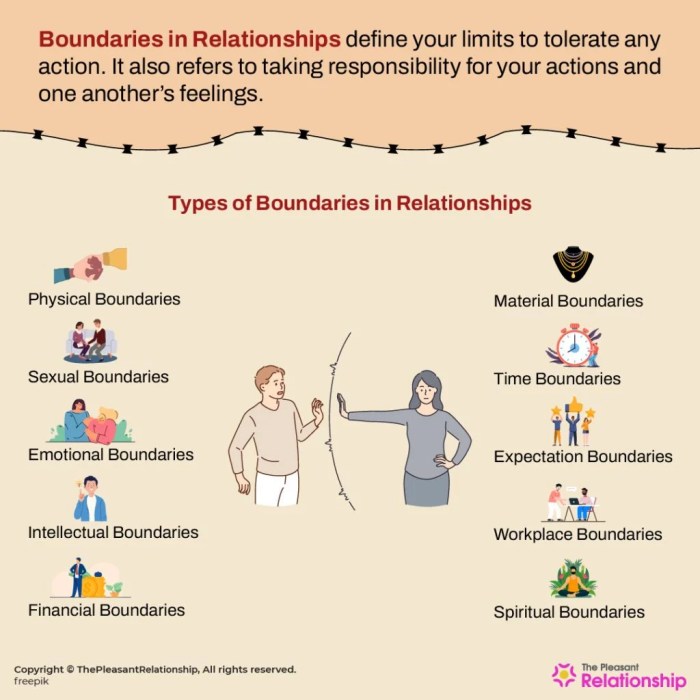
Establishing boundaries in relationships is crucial for maintaining healthy dynamics and fostering mutual respect. Different types of boundaries exist, including emotional, physical, time, and more. These boundaries can vary depending on the nature of the relationship, whether it is romantic, familial, or a friendship. Setting clear boundaries helps individuals feel respected and understood, leading to stronger connections.

Emotional Boundaries

Emotional boundaries involve understanding and respecting each other’s feelings, thoughts, and personal space. It is essential to communicate openly about emotions without judgment or criticism. For example, in a romantic relationship, partners may establish boundaries around discussing past relationships to avoid triggering jealousy or insecurity.

Physical Boundaries

Physical boundaries encompass personal space, touch, and intimacy levels. It is vital to establish comfort levels regarding physical contact and respect each other’s boundaries. For instance, in a friendship, setting boundaries around personal space can prevent misunderstandings and discomfort.

Time Boundaries

Time boundaries revolve around respecting each other’s schedules, priorities, and availability. Establishing clear expectations about time commitments can prevent misunderstandings and conflicts. In a familial relationship, setting boundaries around personal time can help individuals balance family responsibilities with self-care.

Professional Boundaries

In professional relationships, boundaries are essential to maintain professionalism, respect, and ethical conduct. Clear boundaries can prevent conflicts of interest and ensure a healthy work environment. For example, in a boss-employee relationship, setting boundaries around personal discussions at work can maintain a professional atmosphere.

Scenarios of Improved Relationships

Setting clear boundaries in relationships can lead to positive outcomes. For instance, a couple who establishes emotional boundaries around communication may experience improved trust and understanding. Similarly, friends who respect each other’s physical boundaries can strengthen their bond and avoid discomfort.

Boundary Violations

Boundary violations occur when one person disregards or crosses another’s established boundaries. This can lead to feelings of betrayal, resentment, and mistrust. It is crucial to address boundary violations promptly and communicate openly to prevent further harm to the relationship.

Setting Boundaries in Relationships

Setting boundaries in relationships is crucial for establishing healthy dynamics and ensuring mutual respect. Here is a step-by-step guide on how to set boundaries in a new relationship:

Step-by-Step Guide to Setting Boundaries in a New Relationship

  • Reflect on Your Needs: Take time to identify your own needs, values, and limits before communicating them to your partner.
  • Communicate Clearly: Express your boundaries in a clear and direct manner, using “I” statements to avoid sounding accusatory.
  • Listen and Validate: Be open to hearing your partner’s perspective and validate their feelings, even if they differ from yours.
  • Set Consequences: Clearly communicate the consequences of crossing boundaries, and be prepared to enforce them if necessary.
  • Revisit and Adjust: Regularly revisit and adjust boundaries as the relationship evolves, ensuring they continue to meet both partners’ needs.

Challenges in Setting Boundaries in Relationships

Individuals may face various challenges when trying to set boundaries in relationships, including:

  • Fear of Conflict: Some people avoid setting boundaries to prevent conflict or rejection.
  • Guilt or Obligation: Feelings of guilt or obligation can make it challenging to assert boundaries.
  • External Influences: External pressures from family, friends, or societal norms may influence boundary-setting decisions.

Examples of Healthy Boundaries in Different Types of Relationships

Healthy boundaries can vary depending on the type of relationship. Here are some examples:

Relationship Type Example of Healthy Boundary
Friendship Setting limits on how often you are available to hang out to prioritize self-care.
Romantic Relationship Establishing personal space boundaries to maintain individual identities within the relationship.
Family Communicating expectations for respect and boundaries within family interactions.

Cultural and Societal Influences on Boundary-Setting

Cultural and societal norms can significantly impact how individuals perceive and establish boundaries in relationships. These influences may include:

Expectations for gender roles, communication styles, and values related to personal space and privacy.

Boundaries and Self-Care

Setting boundaries in relationships is closely tied to the practice of self-care. When individuals establish and enforce their boundaries, they are essentially prioritizing their own needs and well-being. This act of self-respect can have profound effects on mental health and overall wellness.

Respecting Personal Boundaries for Better Mental Health

  • Respecting personal boundaries is a form of self-respect that can lead to improved mental health outcomes.
  • By setting boundaries, individuals communicate their needs and limits, reducing feelings of resentment or being overwhelmed.
  • When personal boundaries are upheld, individuals are more likely to experience a sense of control and autonomy in their relationships.

Maintaining Identity Through Boundaries

  • Boundaries help individuals define their own identity separate from their relationships.
  • By setting and maintaining boundaries, individuals can prevent their sense of self from being overshadowed by others.
  • Healthy boundaries allow individuals to prioritize their values, beliefs, and interests, contributing to a strong sense of self.

Recognizing and Addressing Boundary Crossings

  • It is important to be aware of signs that indicate when boundaries are being crossed in a relationship.
  • Feelings of discomfort, resentment, or violation may indicate that a boundary has been breached.
  • When boundaries are crossed, it is crucial to communicate assertively and express one’s needs and limits clearly.
  • Establishing consequences for boundary violations can help reinforce the importance of respecting personal boundaries.

As we conclude, remember that clear boundaries are the cornerstone of any thriving relationship, ensuring mutual respect and understanding for a fulfilling connection.

Clarifying Questions

How can setting boundaries improve relationships?

Setting boundaries helps establish mutual respect and fosters healthier dynamics by clearly defining individual needs and limits.

What are some common challenges in setting boundaries?

Some challenges include fear of conflict, guilt for asserting needs, and concerns about being perceived as selfish.

How do boundaries contribute to self-care?

Boundaries play a vital role in self-care by promoting mental well-being, preserving personal identity, and preventing emotional burnout.

Relationship red flags Signs to Watch Out For in a Relationship

Flags relationship boundaries

Exploring the world of Relationship red flags, this introduction captivates readers with an intriguing glimpse into the warning signs that can indicate potential issues in a relationship. From common behaviors to the importance of early recognition, this overview sets the stage for a deeper dive into maintaining healthy connections.

Relationship Red Flags

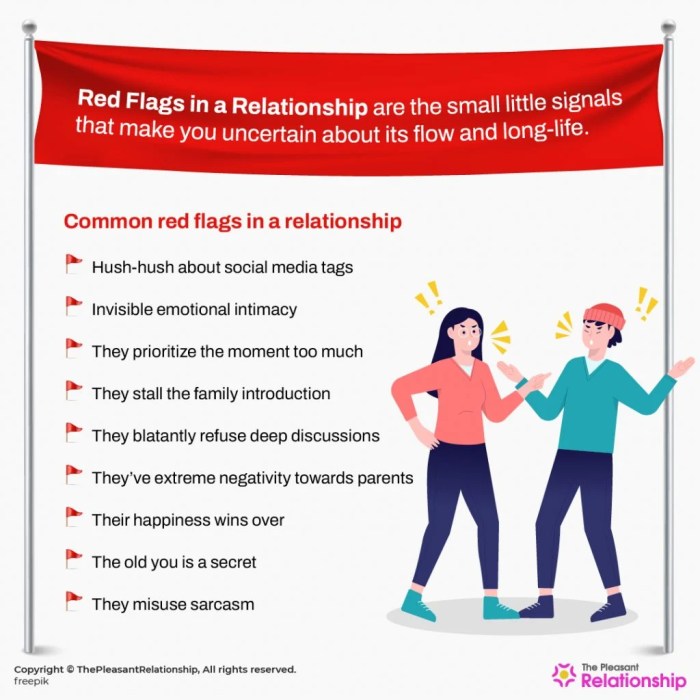
Unhealthy relationships often exhibit certain warning signs, known as red flags, that indicate potential problems. It is essential to recognize these signs early on to address any issues and maintain a healthy relationship.

Common Signs of Unhealthy Relationships

Here are some common behaviors that can serve as red flags in a relationship:

  • Controlling behavior, such as isolating a partner from friends and family.
  • Constant criticism and belittling of the other person.
  • Lack of trust or constant jealousy.
  • Emotional or physical abuse.
  • Gaslighting or manipulation tactics.

Importance of Recognizing Red Flags

Recognizing and addressing red flags early on is crucial for maintaining a healthy relationship. Ignoring these warning signs can lead to further issues and potentially harmful situations. It is essential to communicate openly with your partner and seek help if needed to address any red flags and ensure a safe and supportive relationship.

Communication Issues

Poor communication can be a significant red flag in a relationship as it can lead to misunderstandings, conflicts, and feelings of neglect or resentment between partners. When communication breaks down, it becomes challenging to express emotions, needs, and concerns effectively, ultimately straining the relationship.

Ways to Improve Communication with a Partner

Improving communication with a partner is crucial for maintaining a healthy and strong relationship. Here are some ways to enhance communication:

  • Practice active listening: Pay attention to your partner’s words, tone, and body language to truly understand their perspective.
  • Express thoughts and feelings openly: Be honest and transparent about your emotions, needs, and concerns to foster trust and intimacy.
  • Avoid blaming or criticizing: Use “I” statements to express your feelings without accusing or attacking your partner.
  • Set aside dedicated time for communication: Schedule regular check-ins or discussions to address any issues and strengthen your connection.
  • Seek professional help if needed: Consider couples therapy or counseling to work through communication barriers and improve understanding.

Impact of Unresolved Communication Issues on a Relationship

Unresolved communication issues can have detrimental effects on a relationship, leading to:

  • Increased conflict and tension: Misunderstandings and unexpressed feelings can escalate into arguments and disagreements.
  • Emotional distance: Lack of effective communication can create a sense of disconnection and isolation between partners.
  • Trust issues: Poor communication can erode trust and intimacy, making it difficult to feel secure in the relationship.
  • Stagnation or deterioration of the relationship: Without addressing communication issues, the relationship may become stagnant or even deteriorate over time.
  • Difficulty in resolving conflicts: Without open and clear communication, resolving conflicts and finding compromises becomes challenging.

Trust and Honesty

Trust and honesty are crucial components of a healthy relationship. When there is a lack of trust or dishonesty between partners, it can signal trouble and lead to the deterioration of the relationship. Without trust and honesty, the foundation of the relationship becomes shaky, and conflicts may arise more frequently.

Behaviors that erode trust

  • Consistent lying or deceitful behavior
  • Keeping secrets or withholding important information
  • Cheating or infidelity
  • Breaking promises or commitments
  • Being unreliable or inconsistent in actions

Strategies to rebuild trust and promote honesty

  • Open and honest communication: Encourage open discussions about feelings, concerns, and past actions.
  • Transparency: Be willing to share information and be open about your actions to rebuild trust.
  • Consistency: Demonstrate reliability and consistency in your words and actions to show your commitment to rebuilding trust.
  • Seeking professional help: Consider couples therapy or counseling to work through trust issues with the help of a trained professional.
  • Setting boundaries: Establish clear boundaries and expectations to prevent future breaches of trust.

Boundaries and Respect

Flags relationship boundaries

Setting and respecting boundaries is crucial in maintaining a healthy and balanced relationship. Boundaries help individuals establish their personal space, needs, and limits, leading to mutual respect and understanding between partners.

Signs of Disrespect for Boundaries

Here are signs indicating a lack of respect for boundaries in a relationship:

  • Constantly ignoring or dismissing your partner’s feelings or opinions.
  • Invading personal space without consent.
  • Making important decisions without consulting your partner.
  • Pressuring your partner to do things they are not comfortable with.
  • Disregarding agreed-upon boundaries or limits.

Establishing and Maintaining Mutual Respect

To ensure mutual respect in a relationship, consider the following:

  • Communicate openly and honestly about your needs and boundaries.
  • Listen actively to your partner’s concerns and be empathetic towards their feelings.
  • Respect each other’s personal space, time, and individuality.
  • Set clear boundaries and discuss them regularly to ensure both partners are on the same page.
  • Address any boundary violations promptly and assertively, reinforcing the importance of respect.

In conclusion, being attuned to Relationship red flags is crucial for nurturing strong and thriving relationships. By understanding communication issues, trust, honesty, boundaries, and respect, individuals can navigate their relationships with awareness and care, ensuring mutual happiness and fulfillment.

Questions Often Asked

What are some subtle signs of Relationship red flags?

Subtle signs include passive-aggressive behavior, lack of accountability, and dismissive attitudes towards concerns.

How can one address red flags in a relationship without conflict?

Open and honest communication, seeking counseling, and setting clear boundaries can help address red flags constructively.

Love Languages Understanding and Applying the Five Love Languages for Stronger Relationships

Languages love worksheet chapman gary coach la chessmuseum source

Love languages sets the stage for this enthralling narrative, offering readers a glimpse into a story that is rich in detail with casual formal language style and brimming with originality from the outset.

Love languages play a crucial role in understanding how people give and receive love, influencing the dynamics of relationships in profound ways. This article explores the concept of love languages, delving into the five types identified by Gary Chapman and how they can be applied to enhance connections with loved ones.

Love Languages

Love languages refer to the different ways people express and receive love. Understanding love languages can help individuals communicate their affection more effectively and strengthen their relationships.

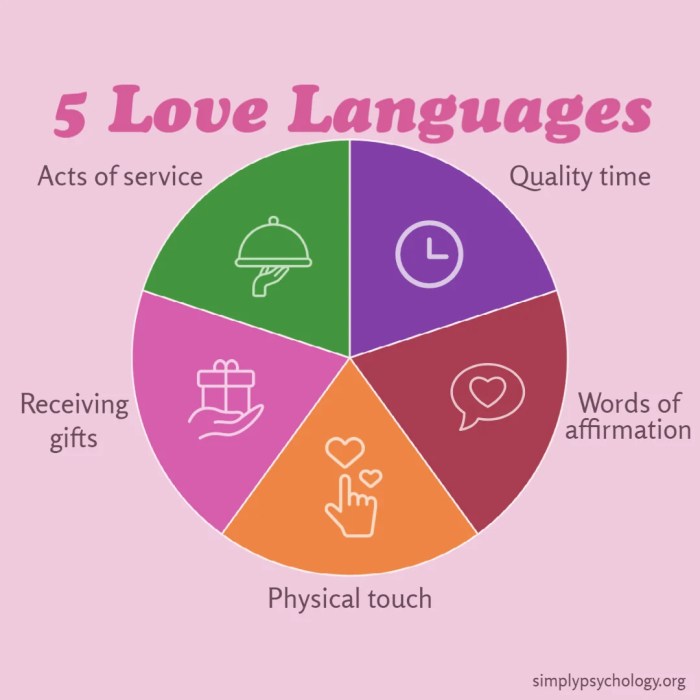
The Five Love Languages by Gary Chapman

  • Words of Affirmation: Expressing love through verbal compliments, encouragement, and kind words.
  • Acts of Service: Showing love by performing thoughtful gestures and actions for your partner.
  • Receiving Gifts: Feeling loved through the giving and receiving of tangible items as symbols of affection.
  • Quality Time: Spending meaningful and focused time together to nurture the relationship.
  • Physical Touch: Feeling loved through physical gestures like hugs, kisses, and holding hands.

Improving Relationships through Love Languages

Understanding your partner’s love language can lead to more effective communication and deeper emotional connections. By expressing love in ways that resonate with your partner, you can create a stronger bond and a more fulfilling relationship.

Examples of Love Languages in Relationships

  • A partner whose love language is Acts of Service may feel most loved when their significant other helps with household chores without being asked.
  • For someone whose love language is Quality Time, simply spending uninterrupted time together, such as going for a walk or having a meaningful conversation, can be incredibly meaningful.
  • Individuals who value Words of Affirmation may appreciate hearing compliments and words of encouragement regularly to feel loved and appreciated.
  • Those who respond to Physical Touch may feel the deepest connection through cuddling, holding hands, or other physical displays of affection.
  • Receiving Gifts as a love language may involve thoughtful gestures like surprising your partner with their favorite treat or a small token of appreciation.

Types of Love Languages

Understanding the concept of love languages can greatly enhance communication and emotional connection in relationships. Gary Chapman identifies five primary love languages that individuals use to express and receive love.

Words of Affirmation

Words of affirmation involve verbal expressions of love and appreciation. This can include compliments, encouragement, and kind words that uplift and validate the other person.

Acts of Service

Acts of service entail doing helpful and considerate things for your partner. This could be anything from cooking a meal, running errands, or completing tasks to ease their burden.

Receiving Gifts

Receiving gifts involves the giving and receiving of physical tokens of love. These gifts can be big or small, and the thought and effort put into selecting them are what matter most.

Quality Time

Quality time is about giving your undivided attention to your partner. This means spending meaningful time together, engaging in activities, and having deep conversations to strengthen the bond.

Physical Touch

Physical touch includes non-verbal expressions of love such as hugs, kisses, holding hands, and other forms of physical affection. This love language emphasizes the power of touch in conveying love and support.

Each love language has its unique way of expressing and receiving love, and individuals may have a primary love language that resonates with them the most. To determine your primary love language, pay attention to how you naturally express love to others and how you prefer to receive love in return. Understanding your primary love language can help you communicate your needs effectively in a relationship and foster a deeper connection with your partner.

Importance in Relationships

Languages love worksheet chapman gary coach la chessmuseum source

Understanding love languages is crucial in relationships as it helps partners communicate their affection in a way that is meaningful to the other person. By knowing each other’s love languages, couples can strengthen their emotional connection and foster a deeper bond.

Misunderstandings Due to Mismatched Love Languages

Mismatched love languages can lead to misunderstandings and miscommunication in relationships. For example, if one partner expresses love through acts of service while the other values quality time together, they may not feel loved or appreciated despite the efforts. This can create tension and distance between partners.

Learning Each Other’s Love Languages

To learn each other’s love languages, partners can take the time to observe how the other person expresses love and what gestures or actions make them feel valued. Open communication and willingness to adapt to each other’s needs are key in understanding and incorporating love languages into the relationship.

Strengthening Relationships with Love Languages

Incorporating love languages into relationships can strengthen the emotional connection between partners. For instance, if one partner’s love language is words of affirmation, regularly expressing appreciation and affection through verbal affirmations can boost their self-esteem and deepen their bond. By recognizing and catering to each other’s love languages, couples can create a more fulfilling and harmonious relationship.

Applying Love Languages

Understanding and applying love languages in daily interactions can significantly improve relationships and deepen emotional connections. By speaking your partner’s love language, you show them love in a way that resonates with their heart.

Incorporating Love Languages in Daily Interactions

One practical way to apply love languages is by actively listening to your partner and observing their reactions to different gestures of love. Pay attention to what makes them feel appreciated and loved, and make an effort to incorporate those actions into your daily routine.

Success Stories of Couples Improving Relationships

  • A couple who discovered their love languages through a relationship workshop started implementing small changes in their interactions. By expressing love in their partner’s preferred language, they saw a significant improvement in communication and intimacy.
  • Another couple found that by understanding each other’s love languages, they were able to overcome misunderstandings and conflicts more effectively. This led to a stronger and more harmonious relationship.

Challenges in Communicating Love Through Different Languages

One common challenge when applying love languages is misinterpreting your partner’s actions or words due to differences in communication styles. It’s essential to have open and honest conversations to avoid misunderstandings and ensure that both partners feel loved and valued.

Practical Tips for Expressing Love

  1. Take the love languages quiz together to identify each other’s primary love languages.
  2. Make a conscious effort to express love in your partner’s preferred language, even if it doesn’t come naturally to you.
  3. Be patient and understanding as you navigate the process of learning to speak each other’s love languages fluently.
  4. Regularly check in with your partner to see if their emotional needs are being met through your expressions of love.

As we conclude this exploration of love languages, it becomes evident that these simple yet powerful concepts have the potential to transform relationships. By recognizing and incorporating each other’s love languages, individuals can build stronger, more fulfilling connections that stand the test of time.

Popular Questions

How can love languages impact relationships?

Understanding and speaking your partner’s love language can lead to deeper emotional connections and more meaningful interactions.

Can someone have more than one primary love language?

While individuals may resonate with multiple love languages, there is usually one that stands out as the primary way they prefer to receive love.

What if my partner and I have different primary love languages?

Recognizing and respecting each other’s love languages can bridge the gap and create a stronger bond, even if they differ.

Building trust in relationships Key to Strong Bonds

Relationship trust emotional intelligence management build building good relationships four healthy do people rebuilding manage helpers marriage happy vision

Embark on a journey to explore the essence of trust in relationships, where communication, reliability, and vulnerability play pivotal roles in fostering deep connections.

Delve into the intricacies of building trust in both personal and professional relationships for a fulfilling and enriching bond.

Understanding Trust in Relationships

Relationship trust emotional intelligence management build building good relationships four healthy do people rebuilding manage helpers marriage happy vision

Trust in relationships refers to the belief and confidence that one person has in another, where they can rely on each other, be open and vulnerable, and expect honesty and loyalty.

Importance of Trust

Trust is essential for building strong relationships as it forms the foundation of emotional connection, communication, and intimacy. Without trust, relationships can suffer from insecurity, doubt, and lack of authenticity.

Impact of Trust in Different Relationships

  • Family: Trust within a family unit fosters a sense of safety, support, and belonging, allowing family members to rely on each other during challenging times and share their true thoughts and feelings without fear of judgment.
  • Friendships: Trust in friendships enables individuals to confide in each other, offer mutual support, and create lasting bonds based on honesty and loyalty. Without trust, friendships may feel superficial or strained.
  • Romantic Relationships: Trust is crucial in romantic relationships as it builds a strong emotional connection, enhances intimacy, and promotes mutual respect and understanding. Infidelity or lack of trust can lead to betrayal and damage the relationship.
  • Professional Relationships: Trust in professional relationships is vital for teamwork, effective communication, and a positive work environment. Colleagues who trust each other are more likely to collaborate, share ideas, and achieve common goals successfully.

Factors Influencing Trust Building

Building trust in relationships is a complex process influenced by various factors. Let’s delve into the key elements that play a crucial role in fostering trust between individuals.

Role of Communication

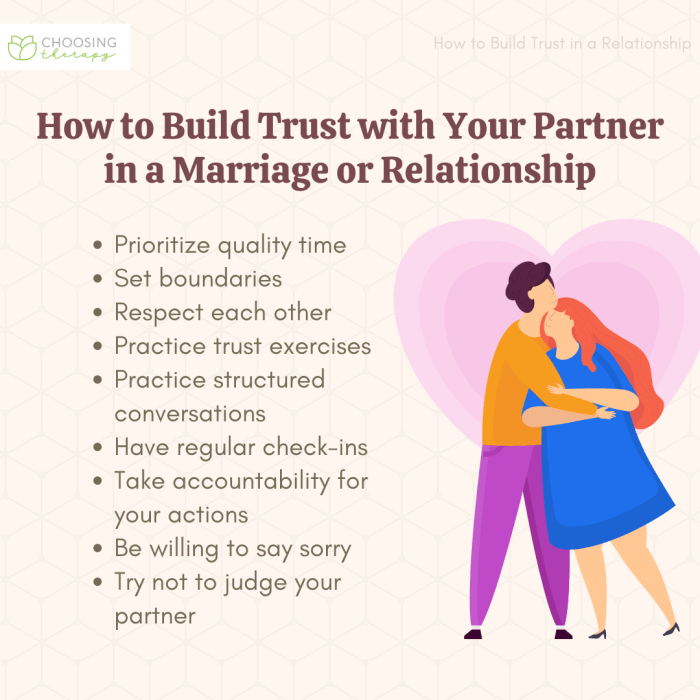
Effective communication is the cornerstone of trust building in relationships. Open and honest communication helps in establishing transparency, understanding, and empathy between individuals. By expressing thoughts, feelings, and concerns openly, individuals can build a sense of connection and mutual respect. Communication also involves active listening, which shows that you value and respect the other person’s perspective.

Importance of Reliability and Consistency

Reliability and consistency are essential factors in fostering trust. When individuals consistently follow through on their commitments and promises, it builds a sense of dependability and reliability. Consistency in behavior and actions helps in creating a secure and predictable environment, which is crucial for building trust over time. Trust is eroded when there is inconsistency or unreliability in words and actions.

Contribution of Vulnerability and Openness

Vulnerability and openness play a significant role in building trust in relationships. When individuals are willing to be vulnerable and share their authentic selves, it creates a deeper connection based on honesty and authenticity. Being open about one’s struggles, fears, and insecurities allows for genuine emotional intimacy and understanding. This willingness to show vulnerability and openness fosters a sense of trust and closeness in relationships.

Building Trust in Personal Relationships

Building trust in personal relationships is essential for creating strong and meaningful connections with those closest to us. Whether it’s with a romantic partner, friends, or family members, trust forms the foundation of healthy and lasting relationships.

Strategies for Building Trust with a Romantic Partner

Building trust in a romantic relationship requires open communication, honesty, and vulnerability. It is essential to be reliable, keep promises, and show genuine care and affection towards your partner. Sharing your thoughts, feelings, and fears openly can help foster a deeper sense of trust and intimacy in the relationship.

The Significance of Empathy and Active Listening with Friends

Empathy and active listening are crucial for nurturing trust with friends. By actively listening to your friends’ concerns, showing understanding, and providing support when needed, you can strengthen the bond of trust between you. Empathy allows you to see things from their perspective, fostering a deeper connection and trust in the friendship.

Honesty and Transparency in Familial Relationships

In familial relationships, honesty and transparency play a vital role in building trust. Being open and honest about your thoughts, actions, and decisions with family members can help create a sense of trust and security within the family unit. By sharing information openly and transparently, you can strengthen your bond with family members and foster a culture of trust and respect.

Building Trust in Professional Relationships

Building trust in professional relationships is crucial for fostering a positive and productive work environment. Trust impacts working relationships in a professional setting by creating a sense of reliability, transparency, and mutual respect among colleagues. When trust is established, team members are more likely to communicate openly, collaborate effectively, and achieve common goals.

The Role of Integrity and Competence

Integrity and competence play key roles in gaining trust from colleagues in a professional setting. Colleagues look for individuals who demonstrate honesty, reliability, and ethical behavior. Showing integrity by following through on commitments, being transparent in communication, and upholding ethical standards are essential in building trust.

Competence is equally important in gaining trust from colleagues. Demonstrating knowledge, skills, and expertise in your field instills confidence in others and shows that you are capable of delivering results. Consistently producing high-quality work and demonstrating a strong work ethic are crucial in gaining trust based on competence.

Tips for Building Trust with Clients or Customers

In a business context, building trust with clients or customers is vital for establishing long-term relationships and fostering loyalty. Here are some tips for building trust in professional relationships:

  • Communicate openly and transparently: Keep clients informed about progress, challenges, and any changes in plans.
  • Deliver on promises: Consistently meet deadlines, deliver quality work, and honor commitments to build credibility.
  • Show empathy and understanding: Listen to clients’ needs, concerns, and feedback, and demonstrate empathy in your interactions.
  • Be reliable and consistent: Establish a track record of reliability by consistently delivering on expectations and maintaining professionalism.
  • Seek feedback and act on it: Invite feedback from clients to show that you value their input and are committed to improving your services.

In conclusion, trust serves as the cornerstone of any successful relationship, weaving together threads of honesty, empathy, and integrity to form unbreakable bonds that stand the test of time.

Questions and Answers

How can I rebuild trust once it’s broken?

To rebuild trust, open communication, genuine remorse, and consistent actions to make amends are crucial. It takes time and effort, but it is possible.

Is trust fragile in relationships?

Trust can be fragile, but with nurturing through honesty, reliability, and empathy, it can grow stronger and more resilient over time.

Why is trust essential in professional relationships?

Trust in professional relationships fosters teamwork, enhances productivity, and creates a positive work environment built on mutual respect and reliability.

Dating Tips Effective Ways to Improve Your Dating Experience

Slideshare dating top mydearvalentine saved

Embark on a journey of self-discovery with Dating Tips, where we delve into the art of conversation, active listening, creating lasting impressions, and decoding body language in the realm of dating.

Dating Tips

Slideshare dating top mydearvalentine saved

Starting a conversation on a first date can be nerve-wracking, but it’s essential for building a connection. One effective way is to ask open-ended questions that encourage your date to share more about themselves. This shows genuine interest and keeps the conversation flowing smoothly.

Importance of Active Listening

Active listening is crucial during a date as it shows respect and interest in what your date is saying. Avoid interrupting and focus on what they are saying, responding appropriately to show you are engaged and attentive.

Tips for Creating a Good First Impression

  • Dress appropriately for the occasion, showing that you put effort into your appearance.
  • Be punctual and respectful of your date’s time.
  • Maintain good eye contact and offer a warm smile to make your date feel comfortable and welcomed.

Significance of Body Language in Dating

Body language plays a significant role in dating as it can convey interest, attraction, and confidence. Ensure your body language is open and inviting, avoiding crossed arms or fidgeting. Maintaining good posture and mirroring your date’s body language can also create a sense of connection and rapport.

Relationship Advice

Building a successful relationship requires a combination of key qualities and strategies to navigate challenges and strengthen the bond between partners.

  • Communication: Open, honest communication is essential for understanding each other’s needs and resolving conflicts effectively.
  • Trust: Trust forms the foundation of a healthy relationship, fostering security and emotional connection between partners.
  • Respect: Mutual respect for each other’s feelings, opinions, and boundaries is crucial in maintaining a supportive and harmonious partnership.
  • Empathy: Being able to empathize with your partner’s emotions and experiences helps in building a deeper connection and showing care and understanding.

Maintaining Personal Space and Quality Time Together

Finding a balance between personal space and spending quality time together is vital for a healthy relationship. It allows for individual growth while nurturing the bond between partners.

  • Set boundaries: Establishing boundaries and respecting each other’s need for personal time can prevent feelings of suffocation and maintain independence within the relationship.
  • Schedule dates: Plan regular date nights or activities to bond and create lasting memories together, strengthening the emotional connection.
  • Communicate openly: Discuss your needs for personal space and quality time with your partner to find a balance that works for both of you.

Resolving Conflicts Peacefully

Conflicts are a natural part of any relationship, but how they are resolved can make a significant difference in the health of the partnership.

  • Active listening: Listen attentively to your partner’s perspective without interrupting, showing empathy and understanding for their feelings.
  • Use “I” statements: Express your feelings and concerns using “I” statements to avoid blame and encourage constructive dialogue.
  • Seek compromise: Find solutions that meet both partners’ needs and involve a willingness to compromise and find common ground.

The Importance of Trust and Communication

Trust and communication are the pillars of a strong and enduring relationship, fostering intimacy and connection between partners.

  • Be honest: Communicate openly and honestly with your partner, sharing your thoughts, feelings, and concerns without fear of judgment.
  • Build trust: Demonstrate reliability and consistency in your actions to build trust and strengthen the emotional bond between you and your partner.
  • Resolve conflicts respectfully: Approach conflicts with a focus on understanding and resolution, rather than winning or placing blame, to maintain trust and respect in the relationship.

In conclusion, mastering these dating tips can elevate your dating game to new heights, paving the way for meaningful connections and potential love interests.

Questions and Answers

How can I start a conversation on a first date?

To start a conversation on a first date, ask open-ended questions, show genuine interest, and actively listen to your date’s responses.

What are some tips for creating a good first impression?

To create a good first impression, dress appropriately, maintain good hygiene, exude confidence, and show respect towards your date.

Why is active listening important during a date?

Active listening is crucial during a date as it shows that you are attentive, interested, and value what your date has to say.