Embark on a journey exploring the importance of Relationship boundaries, crucial for fostering healthy dynamics and strong connections.
From understanding different types of boundaries to setting them effectively, this topic delves into the essence of maintaining respectful relationships.
Relationships
In relationships, boundaries play a crucial role in maintaining healthy dynamics and fostering mutual respect. Without clear boundaries, misunderstandings, conflicts, and even emotional harm can arise. Let’s explore the importance of setting boundaries in different types of relationships and how to communicate them effectively.
Examples of Different Types of Relationships where Boundaries are Important
- Family Relationships: Setting boundaries with family members can help maintain individual autonomy and prevent enmeshment.
- Romantic Relationships: Establishing boundaries around personal space, communication, and expectations can ensure a healthy and balanced partnership.
- Friendships: Clear boundaries in friendships help in respecting each other’s time, emotions, and values.
- Professional Relationships: Boundaries at work are essential for maintaining professionalism and preventing conflicts of interest.
Importance of Setting Boundaries in Relationships
Setting boundaries in relationships is crucial as it helps in:
- Respecting individual needs and preferences.
- Preventing misunderstandings and conflicts.
- Promoting emotional well-being and self-care.
- Fostering mutual trust and respect.
Comparison of Relationships with Strong versus Weak Boundaries
Relationships with strong boundaries tend to be healthier, more respectful, and less prone to conflicts. On the other hand, relationships with weak boundaries may suffer from issues like codependency, lack of respect, and emotional manipulation.
Tips on Communicating and Establishing Boundaries Effectively
- Be clear and specific about your boundaries.
- Communicate assertively and respectfully.
- Listen actively to the boundaries of others.
- Reinforce boundaries consistently and enforce consequences when needed.
- Seek support from a therapist or counselor if you struggle with setting boundaries.
Types of Relationship Boundaries
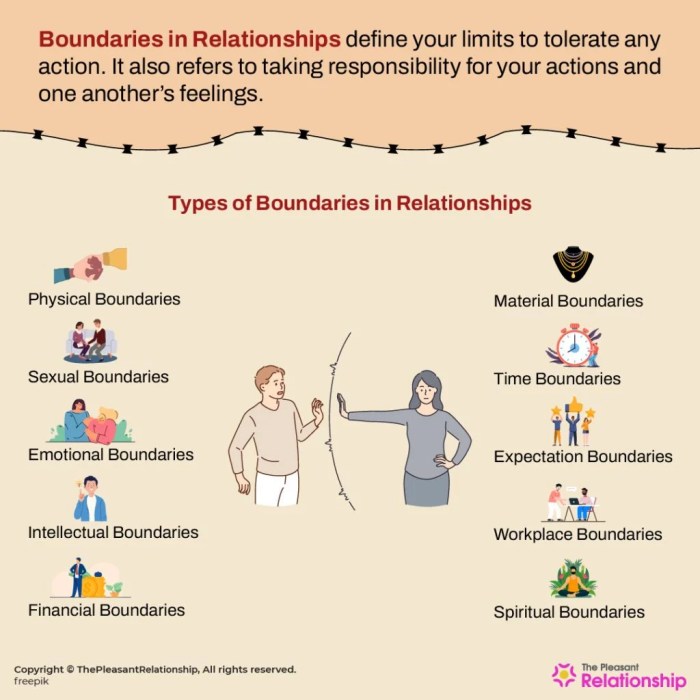
Establishing boundaries in relationships is crucial for maintaining healthy dynamics and fostering mutual respect. Different types of boundaries exist, including emotional, physical, time, and more. These boundaries can vary depending on the nature of the relationship, whether it is romantic, familial, or a friendship. Setting clear boundaries helps individuals feel respected and understood, leading to stronger connections.
Emotional Boundaries
Emotional boundaries involve understanding and respecting each other’s feelings, thoughts, and personal space. It is essential to communicate openly about emotions without judgment or criticism. For example, in a romantic relationship, partners may establish boundaries around discussing past relationships to avoid triggering jealousy or insecurity.
Physical Boundaries
Physical boundaries encompass personal space, touch, and intimacy levels. It is vital to establish comfort levels regarding physical contact and respect each other’s boundaries. For instance, in a friendship, setting boundaries around personal space can prevent misunderstandings and discomfort.
Time Boundaries
Time boundaries revolve around respecting each other’s schedules, priorities, and availability. Establishing clear expectations about time commitments can prevent misunderstandings and conflicts. In a familial relationship, setting boundaries around personal time can help individuals balance family responsibilities with self-care.
Professional Boundaries
In professional relationships, boundaries are essential to maintain professionalism, respect, and ethical conduct. Clear boundaries can prevent conflicts of interest and ensure a healthy work environment. For example, in a boss-employee relationship, setting boundaries around personal discussions at work can maintain a professional atmosphere.
Scenarios of Improved Relationships
Setting clear boundaries in relationships can lead to positive outcomes. For instance, a couple who establishes emotional boundaries around communication may experience improved trust and understanding. Similarly, friends who respect each other’s physical boundaries can strengthen their bond and avoid discomfort.
Boundary Violations
Boundary violations occur when one person disregards or crosses another’s established boundaries. This can lead to feelings of betrayal, resentment, and mistrust. It is crucial to address boundary violations promptly and communicate openly to prevent further harm to the relationship.
Setting Boundaries in Relationships
Setting boundaries in relationships is crucial for establishing healthy dynamics and ensuring mutual respect. Here is a step-by-step guide on how to set boundaries in a new relationship:
Step-by-Step Guide to Setting Boundaries in a New Relationship
- Reflect on Your Needs: Take time to identify your own needs, values, and limits before communicating them to your partner.
- Communicate Clearly: Express your boundaries in a clear and direct manner, using “I” statements to avoid sounding accusatory.
- Listen and Validate: Be open to hearing your partner’s perspective and validate their feelings, even if they differ from yours.
- Set Consequences: Clearly communicate the consequences of crossing boundaries, and be prepared to enforce them if necessary.
- Revisit and Adjust: Regularly revisit and adjust boundaries as the relationship evolves, ensuring they continue to meet both partners’ needs.
Challenges in Setting Boundaries in Relationships
Individuals may face various challenges when trying to set boundaries in relationships, including:
- Fear of Conflict: Some people avoid setting boundaries to prevent conflict or rejection.
- Guilt or Obligation: Feelings of guilt or obligation can make it challenging to assert boundaries.
- External Influences: External pressures from family, friends, or societal norms may influence boundary-setting decisions.
Examples of Healthy Boundaries in Different Types of Relationships
Healthy boundaries can vary depending on the type of relationship. Here are some examples:
| Relationship Type | Example of Healthy Boundary |
|---|---|
| Friendship | Setting limits on how often you are available to hang out to prioritize self-care. |
| Romantic Relationship | Establishing personal space boundaries to maintain individual identities within the relationship. |
| Family | Communicating expectations for respect and boundaries within family interactions. |
Cultural and Societal Influences on Boundary-Setting
Cultural and societal norms can significantly impact how individuals perceive and establish boundaries in relationships. These influences may include:
Expectations for gender roles, communication styles, and values related to personal space and privacy.
Boundaries and Self-Care
Setting boundaries in relationships is closely tied to the practice of self-care. When individuals establish and enforce their boundaries, they are essentially prioritizing their own needs and well-being. This act of self-respect can have profound effects on mental health and overall wellness.
Respecting Personal Boundaries for Better Mental Health
- Respecting personal boundaries is a form of self-respect that can lead to improved mental health outcomes.
- By setting boundaries, individuals communicate their needs and limits, reducing feelings of resentment or being overwhelmed.
- When personal boundaries are upheld, individuals are more likely to experience a sense of control and autonomy in their relationships.
Maintaining Identity Through Boundaries
- Boundaries help individuals define their own identity separate from their relationships.
- By setting and maintaining boundaries, individuals can prevent their sense of self from being overshadowed by others.
- Healthy boundaries allow individuals to prioritize their values, beliefs, and interests, contributing to a strong sense of self.
Recognizing and Addressing Boundary Crossings
- It is important to be aware of signs that indicate when boundaries are being crossed in a relationship.
- Feelings of discomfort, resentment, or violation may indicate that a boundary has been breached.
- When boundaries are crossed, it is crucial to communicate assertively and express one’s needs and limits clearly.
- Establishing consequences for boundary violations can help reinforce the importance of respecting personal boundaries.
As we conclude, remember that clear boundaries are the cornerstone of any thriving relationship, ensuring mutual respect and understanding for a fulfilling connection.
Clarifying Questions
How can setting boundaries improve relationships?
Setting boundaries helps establish mutual respect and fosters healthier dynamics by clearly defining individual needs and limits.
What are some common challenges in setting boundaries?
Some challenges include fear of conflict, guilt for asserting needs, and concerns about being perceived as selfish.
How do boundaries contribute to self-care?
Boundaries play a vital role in self-care by promoting mental well-being, preserving personal identity, and preventing emotional burnout.