Relationship Boundaries Setting Healthy Limits for Better Connections

Boundaries relationships intellectual stronger bonobology

Embark on a journey exploring the importance of Relationship boundaries, crucial for fostering healthy dynamics and strong connections.

From understanding different types of boundaries to setting them effectively, this topic delves into the essence of maintaining respectful relationships.

Relationships

In relationships, boundaries play a crucial role in maintaining healthy dynamics and fostering mutual respect. Without clear boundaries, misunderstandings, conflicts, and even emotional harm can arise. Let’s explore the importance of setting boundaries in different types of relationships and how to communicate them effectively.

Examples of Different Types of Relationships where Boundaries are Important

  • Family Relationships: Setting boundaries with family members can help maintain individual autonomy and prevent enmeshment.
  • Romantic Relationships: Establishing boundaries around personal space, communication, and expectations can ensure a healthy and balanced partnership.
  • Friendships: Clear boundaries in friendships help in respecting each other’s time, emotions, and values.
  • Professional Relationships: Boundaries at work are essential for maintaining professionalism and preventing conflicts of interest.

Importance of Setting Boundaries in Relationships

Setting boundaries in relationships is crucial as it helps in:

  • Respecting individual needs and preferences.
  • Preventing misunderstandings and conflicts.
  • Promoting emotional well-being and self-care.
  • Fostering mutual trust and respect.

Comparison of Relationships with Strong versus Weak Boundaries

Relationships with strong boundaries tend to be healthier, more respectful, and less prone to conflicts. On the other hand, relationships with weak boundaries may suffer from issues like codependency, lack of respect, and emotional manipulation.

Tips on Communicating and Establishing Boundaries Effectively

  • Be clear and specific about your boundaries.
  • Communicate assertively and respectfully.
  • Listen actively to the boundaries of others.
  • Reinforce boundaries consistently and enforce consequences when needed.
  • Seek support from a therapist or counselor if you struggle with setting boundaries.

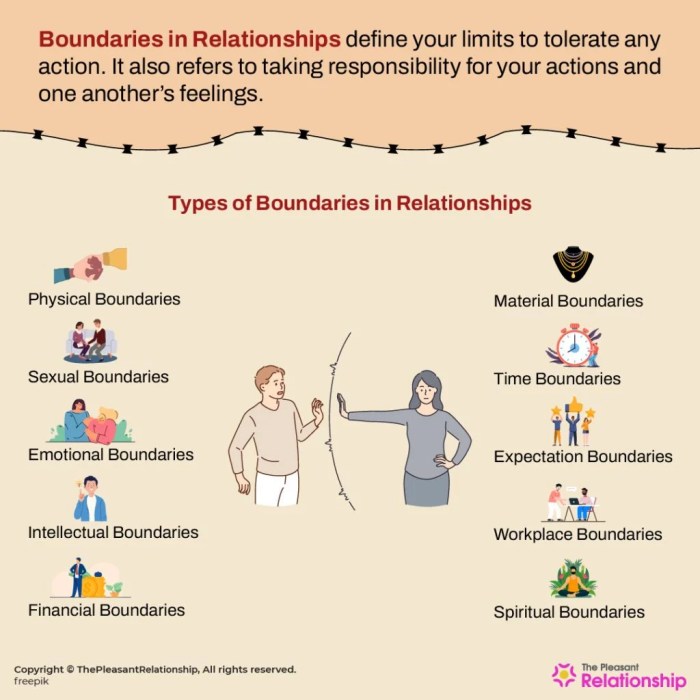
Types of Relationship Boundaries

Boundaries relationships intellectual stronger bonobology

Establishing boundaries in relationships is crucial for maintaining healthy dynamics and fostering mutual respect. Different types of boundaries exist, including emotional, physical, time, and more. These boundaries can vary depending on the nature of the relationship, whether it is romantic, familial, or a friendship. Setting clear boundaries helps individuals feel respected and understood, leading to stronger connections.

Emotional Boundaries

Emotional boundaries involve understanding and respecting each other’s feelings, thoughts, and personal space. It is essential to communicate openly about emotions without judgment or criticism. For example, in a romantic relationship, partners may establish boundaries around discussing past relationships to avoid triggering jealousy or insecurity.

Physical Boundaries

Physical boundaries encompass personal space, touch, and intimacy levels. It is vital to establish comfort levels regarding physical contact and respect each other’s boundaries. For instance, in a friendship, setting boundaries around personal space can prevent misunderstandings and discomfort.

Time Boundaries

Time boundaries revolve around respecting each other’s schedules, priorities, and availability. Establishing clear expectations about time commitments can prevent misunderstandings and conflicts. In a familial relationship, setting boundaries around personal time can help individuals balance family responsibilities with self-care.

Professional Boundaries

In professional relationships, boundaries are essential to maintain professionalism, respect, and ethical conduct. Clear boundaries can prevent conflicts of interest and ensure a healthy work environment. For example, in a boss-employee relationship, setting boundaries around personal discussions at work can maintain a professional atmosphere.

Scenarios of Improved Relationships

Setting clear boundaries in relationships can lead to positive outcomes. For instance, a couple who establishes emotional boundaries around communication may experience improved trust and understanding. Similarly, friends who respect each other’s physical boundaries can strengthen their bond and avoid discomfort.

Boundary Violations

Boundary violations occur when one person disregards or crosses another’s established boundaries. This can lead to feelings of betrayal, resentment, and mistrust. It is crucial to address boundary violations promptly and communicate openly to prevent further harm to the relationship.

Setting Boundaries in Relationships

Setting boundaries in relationships is crucial for establishing healthy dynamics and ensuring mutual respect. Here is a step-by-step guide on how to set boundaries in a new relationship:

Step-by-Step Guide to Setting Boundaries in a New Relationship

  • Reflect on Your Needs: Take time to identify your own needs, values, and limits before communicating them to your partner.
  • Communicate Clearly: Express your boundaries in a clear and direct manner, using “I” statements to avoid sounding accusatory.
  • Listen and Validate: Be open to hearing your partner’s perspective and validate their feelings, even if they differ from yours.
  • Set Consequences: Clearly communicate the consequences of crossing boundaries, and be prepared to enforce them if necessary.
  • Revisit and Adjust: Regularly revisit and adjust boundaries as the relationship evolves, ensuring they continue to meet both partners’ needs.

Challenges in Setting Boundaries in Relationships

Individuals may face various challenges when trying to set boundaries in relationships, including:

  • Fear of Conflict: Some people avoid setting boundaries to prevent conflict or rejection.
  • Guilt or Obligation: Feelings of guilt or obligation can make it challenging to assert boundaries.
  • External Influences: External pressures from family, friends, or societal norms may influence boundary-setting decisions.

Examples of Healthy Boundaries in Different Types of Relationships

Healthy boundaries can vary depending on the type of relationship. Here are some examples:

Relationship Type Example of Healthy Boundary
Friendship Setting limits on how often you are available to hang out to prioritize self-care.
Romantic Relationship Establishing personal space boundaries to maintain individual identities within the relationship.
Family Communicating expectations for respect and boundaries within family interactions.

Cultural and Societal Influences on Boundary-Setting

Cultural and societal norms can significantly impact how individuals perceive and establish boundaries in relationships. These influences may include:

Expectations for gender roles, communication styles, and values related to personal space and privacy.

Boundaries and Self-Care

Setting boundaries in relationships is closely tied to the practice of self-care. When individuals establish and enforce their boundaries, they are essentially prioritizing their own needs and well-being. This act of self-respect can have profound effects on mental health and overall wellness.

Respecting Personal Boundaries for Better Mental Health

  • Respecting personal boundaries is a form of self-respect that can lead to improved mental health outcomes.
  • By setting boundaries, individuals communicate their needs and limits, reducing feelings of resentment or being overwhelmed.
  • When personal boundaries are upheld, individuals are more likely to experience a sense of control and autonomy in their relationships.

Maintaining Identity Through Boundaries

  • Boundaries help individuals define their own identity separate from their relationships.
  • By setting and maintaining boundaries, individuals can prevent their sense of self from being overshadowed by others.
  • Healthy boundaries allow individuals to prioritize their values, beliefs, and interests, contributing to a strong sense of self.

Recognizing and Addressing Boundary Crossings

  • It is important to be aware of signs that indicate when boundaries are being crossed in a relationship.
  • Feelings of discomfort, resentment, or violation may indicate that a boundary has been breached.
  • When boundaries are crossed, it is crucial to communicate assertively and express one’s needs and limits clearly.
  • Establishing consequences for boundary violations can help reinforce the importance of respecting personal boundaries.

As we conclude, remember that clear boundaries are the cornerstone of any thriving relationship, ensuring mutual respect and understanding for a fulfilling connection.

Clarifying Questions

How can setting boundaries improve relationships?

Setting boundaries helps establish mutual respect and fosters healthier dynamics by clearly defining individual needs and limits.

What are some common challenges in setting boundaries?

Some challenges include fear of conflict, guilt for asserting needs, and concerns about being perceived as selfish.

How do boundaries contribute to self-care?

Boundaries play a vital role in self-care by promoting mental well-being, preserving personal identity, and preventing emotional burnout.

Breakup Recovery Overcoming Heartbreak and Finding Healing

Recovering ways forgive breakup

Embarking on the journey of breakup recovery can be a challenging yet transformative experience. As we delve into the intricacies of healing after a breakup, we uncover valuable insights and practical strategies to navigate this emotional terrain with resilience and growth.

Exploring the stages, self-care strategies, seeking support, reflection, and growth, and the dynamics of relationships post-breakup, this comprehensive guide offers a roadmap towards emotional well-being and personal empowerment.

Breakup Recovery

Breakup recovery is the process of healing and moving on after the end of a romantic relationship. It is essential for individuals to come to terms with the breakup, process their emotions, and eventually find closure in order to move forward in a healthy way.

Common Challenges During Breakup Recovery

  • Emotional Rollercoaster: People often experience a range of emotions such as sadness, anger, guilt, and confusion during breakup recovery.
  • Feelings of Loneliness: Adjusting to life without a partner can lead to feelings of isolation and loneliness.
  • Low Self-Esteem: Breakups can sometimes negatively impact one’s self-worth and confidence.
  • Memories and Triggers: Memories of the relationship and places associated with the ex-partner can trigger emotional distress.

Healthy Coping Mechanisms for Dealing with a Breakup

  • Seek Support: Reach out to friends, family, or a therapist for emotional support and guidance.
  • Practice Self-Care: Engage in activities that promote self-care and well-being, such as exercise, meditation, or hobbies.
  • Set Boundaries: Establish boundaries with your ex-partner to allow yourself space and time to heal.
  • Focus on Personal Growth: Use this time to reflect on yourself, set new goals, and work towards self-improvement.

Stages of Breakup Recovery

Going through a breakup can be a challenging and emotional process. It often involves several stages that individuals typically experience as they work towards healing and moving on.

Denial

During the denial stage, individuals may struggle to accept that the relationship has ended. They may hold on to hope that things will go back to how they were, and may find it hard to come to terms with the reality of the situation. Emotions in this stage can range from shock and disbelief to confusion and sadness.

Anger

As the reality of the breakup sets in, individuals may experience feelings of anger towards their ex-partner, themselves, or the situation. This stage is often marked by resentment, frustration, and a desire for revenge. It is important for individuals to find healthy ways to express and process their anger during this stage.

Bargaining

In the bargaining stage, individuals may try to negotiate with their ex-partner or with a higher power in an attempt to reverse the breakup. They may make promises or seek ways to change the outcome, hoping to regain what was lost. Emotions in this stage can include guilt, regret, and a sense of desperation.

Depression

During the depression stage, individuals may experience intense feelings of sadness, loneliness, and despair. They may struggle with loss, grief, and a sense of emptiness as they come to terms with the end of the relationship. It is important for individuals to reach out for support and practice self-care during this stage.

Acceptance

The final stage of breakup recovery is acceptance. In this stage, individuals begin to come to terms with the end of the relationship and start to focus on moving forward with their lives. Emotions in this stage can include peace, closure, and a sense of readiness for new beginnings. It is a time of healing and growth as individuals work towards building a new chapter for themselves.

Self-Care Strategies

After a breakup, it’s crucial to prioritize self-care to promote mental and emotional well-being. Taking care of yourself can help you heal and move forward. Here are some self-care tips to consider:

Role of Physical Activities

Engaging in physical activities can play a significant role in aiding breakup recovery. Exercise releases endorphins, which are known as “feel-good” hormones. Whether it’s going for a run, practicing yoga, or hitting the gym, physical activity can help reduce stress, improve mood, and boost self-esteem. It also provides a healthy outlet for emotions and can help you feel more empowered and in control of your life.

Mindfulness Techniques

Practicing mindfulness can be a powerful tool in healing from a breakup. Mindfulness involves being present in the moment without judgment. This practice can help you process your emotions, reduce anxiety, and improve overall well-being. Techniques such as deep breathing, meditation, and mindfulness exercises can help you stay grounded and focused on the present moment, rather than dwelling on the past or worrying about the future.

By incorporating mindfulness into your daily routine, you can cultivate self-awareness, acceptance, and resilience as you navigate through the healing process.

Seeking Support

Recovering ways forgive breakup

Seeking support from friends, family, or professionals is crucial during breakup recovery. It provides a sense of connection, comfort, and guidance that can help individuals navigate through the healing process more effectively.

Online Resources and Support Groups

  • Online forums and support groups dedicated to breakup recovery offer a safe space for individuals to share their experiences, seek advice, and connect with others who are going through similar situations.
  • Websites like Breakuprecovery.com, PsychCentral, and 7 Cups provide valuable resources, articles, and online communities where individuals can find support and encouragement.

Impact of Support Networks

Having a strong support network can positively impact the recovery process in several ways:

  • Emotional Support: Friends, family, or professionals can offer a listening ear, empathy, and understanding during difficult times, helping individuals process their emotions and feelings.
  • Practical Advice: Support networks can provide practical advice on coping strategies, self-care practices, and healthy ways to move forward after a breakup.
  • Motivation and Encouragement: Encouragement from others can boost confidence, motivation, and self-esteem, inspiring individuals to focus on personal growth and healing.
  • Social Connection: Connecting with others who have gone through similar experiences can reduce feelings of isolation and loneliness, creating a sense of belonging and community.

Reflection and Growth

Self-reflection plays a crucial role in the process of breakup recovery as it allows individuals to introspect, understand their emotions, and identify areas for personal growth.

Benefits of Self-Reflection

Self-reflection after a breakup enables individuals to gain insight into their thoughts, feelings, and behaviors during the relationship and after its end. This process helps in recognizing patterns, learning from mistakes, and fostering self-awareness.

  • Identifying unhealthy relationship dynamics
  • Understanding personal needs and boundaries
  • Promoting emotional healing and closure

Personal Growth Post-Breakup

Overcoming a breakup can lead to significant personal growth as individuals navigate through the emotional turmoil and challenges, emerging stronger and more resilient.

  • Building self-confidence and independence
  • Developing stronger coping mechanisms
  • Rediscovering personal interests and passions

Turning Breakup into Positive Change

Many individuals have transformed their breakup experiences into opportunities for positive change, using the pain as a catalyst for personal growth and self-improvement.

“My breakup allowed me to focus on myself, pursue my goals, and ultimately discover a newfound sense of self-worth and purpose.” – Sarah

“I channeled my energy into self-care and therapy, leading me to heal old wounds, prioritize my mental health, and create healthier relationships in the future.” – Alex

“Losing someone I loved deeply taught me the importance of self-love, setting boundaries, and never settling for anything less than I deserve.” – Maya

Relationships

Maintaining healthy relationships requires effective communication, trust, and intimacy. Communication plays a crucial role in fostering understanding, resolving conflicts, and strengthening the bond between partners.

Role of Communication in Healthy Relationships

Effective communication involves active listening, expressing thoughts and feelings openly, and being empathetic towards your partner. It is essential to communicate honestly, respectfully, and clearly to avoid misunderstandings and build a strong foundation for the relationship.

Common Challenges in Relationships and How to Address Them

Some common challenges faced by couples include lack of communication, trust issues, and differences in values or expectations. These challenges can be addressed by fostering open communication, seeking professional help if needed, setting boundaries, and practicing empathy and understanding towards each other.

Tips for Fostering Trust and Intimacy in Romantic Relationships

  • Build trust through honesty, reliability, and consistency in words and actions.
  • Share your thoughts, feelings, and vulnerabilities with your partner to deepen intimacy.
  • Spend quality time together, engage in activities that you both enjoy, and create shared experiences.
  • Show appreciation, affection, and support for each other to strengthen the emotional connection.
  • Respect each other’s boundaries, individuality, and personal space to maintain a healthy balance in the relationship.

In conclusion, breakup recovery is not just about moving on; it’s about rediscovering yourself, embracing growth, and forging stronger, healthier relationships. By prioritizing self-care, seeking support, and reflecting on the lessons learned, you pave the way for a brighter, more fulfilling future ahead.

Quick FAQs

How long does breakup recovery typically take?

Breakup recovery duration varies for each individual but can range from a few months to a year or more, depending on the depth of the relationship and personal resilience.

Is it normal to still feel emotional months after a breakup?

Yes, it’s normal to experience waves of emotions even months after a breakup. Healing is a non-linear process, and it’s important to allow yourself to feel and process these emotions at your own pace.

Can breakup recovery lead to personal growth?

Absolutely. Overcoming a breakup can be a catalyst for personal growth, allowing individuals to reassess their values, goals, and priorities, ultimately leading to positive transformations in various aspects of life.