Exploring the world of Relationship red flags, this introduction captivates readers with an intriguing glimpse into the warning signs that can indicate potential issues in a relationship. From common behaviors to the importance of early recognition, this overview sets the stage for a deeper dive into maintaining healthy connections.
Relationship Red Flags
Unhealthy relationships often exhibit certain warning signs, known as red flags, that indicate potential problems. It is essential to recognize these signs early on to address any issues and maintain a healthy relationship.
Common Signs of Unhealthy Relationships
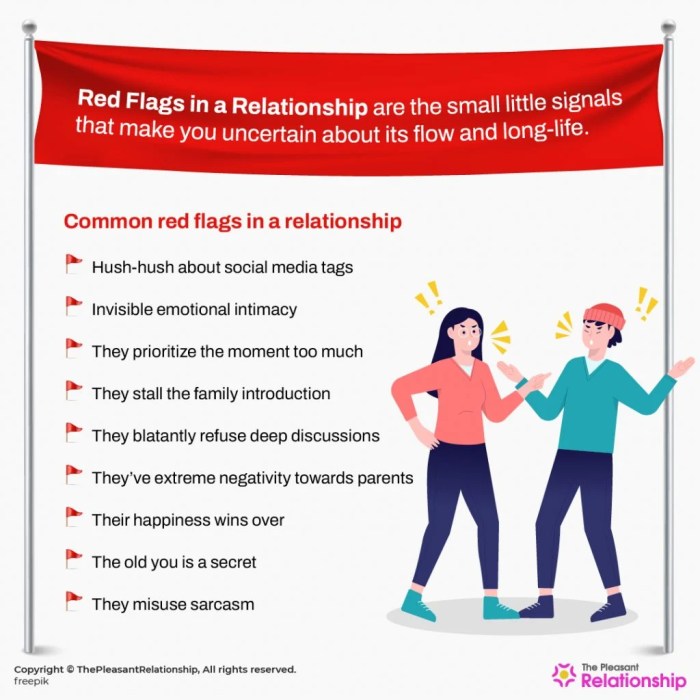
Here are some common behaviors that can serve as red flags in a relationship:
- Controlling behavior, such as isolating a partner from friends and family.
- Constant criticism and belittling of the other person.
- Lack of trust or constant jealousy.
- Emotional or physical abuse.
- Gaslighting or manipulation tactics.
Importance of Recognizing Red Flags
Recognizing and addressing red flags early on is crucial for maintaining a healthy relationship. Ignoring these warning signs can lead to further issues and potentially harmful situations. It is essential to communicate openly with your partner and seek help if needed to address any red flags and ensure a safe and supportive relationship.
Communication Issues
Poor communication can be a significant red flag in a relationship as it can lead to misunderstandings, conflicts, and feelings of neglect or resentment between partners. When communication breaks down, it becomes challenging to express emotions, needs, and concerns effectively, ultimately straining the relationship.
Ways to Improve Communication with a Partner
Improving communication with a partner is crucial for maintaining a healthy and strong relationship. Here are some ways to enhance communication:
- Practice active listening: Pay attention to your partner’s words, tone, and body language to truly understand their perspective.
- Express thoughts and feelings openly: Be honest and transparent about your emotions, needs, and concerns to foster trust and intimacy.
- Avoid blaming or criticizing: Use “I” statements to express your feelings without accusing or attacking your partner.
- Set aside dedicated time for communication: Schedule regular check-ins or discussions to address any issues and strengthen your connection.
- Seek professional help if needed: Consider couples therapy or counseling to work through communication barriers and improve understanding.
Impact of Unresolved Communication Issues on a Relationship
Unresolved communication issues can have detrimental effects on a relationship, leading to:
- Increased conflict and tension: Misunderstandings and unexpressed feelings can escalate into arguments and disagreements.
- Emotional distance: Lack of effective communication can create a sense of disconnection and isolation between partners.
- Trust issues: Poor communication can erode trust and intimacy, making it difficult to feel secure in the relationship.
- Stagnation or deterioration of the relationship: Without addressing communication issues, the relationship may become stagnant or even deteriorate over time.
- Difficulty in resolving conflicts: Without open and clear communication, resolving conflicts and finding compromises becomes challenging.
Trust and Honesty
Trust and honesty are crucial components of a healthy relationship. When there is a lack of trust or dishonesty between partners, it can signal trouble and lead to the deterioration of the relationship. Without trust and honesty, the foundation of the relationship becomes shaky, and conflicts may arise more frequently.
Behaviors that erode trust
- Consistent lying or deceitful behavior
- Keeping secrets or withholding important information
- Cheating or infidelity
- Breaking promises or commitments
- Being unreliable or inconsistent in actions
Strategies to rebuild trust and promote honesty
- Open and honest communication: Encourage open discussions about feelings, concerns, and past actions.
- Transparency: Be willing to share information and be open about your actions to rebuild trust.
- Consistency: Demonstrate reliability and consistency in your words and actions to show your commitment to rebuilding trust.
- Seeking professional help: Consider couples therapy or counseling to work through trust issues with the help of a trained professional.
- Setting boundaries: Establish clear boundaries and expectations to prevent future breaches of trust.
Boundaries and Respect
Setting and respecting boundaries is crucial in maintaining a healthy and balanced relationship. Boundaries help individuals establish their personal space, needs, and limits, leading to mutual respect and understanding between partners.
Signs of Disrespect for Boundaries
Here are signs indicating a lack of respect for boundaries in a relationship:
- Constantly ignoring or dismissing your partner’s feelings or opinions.
- Invading personal space without consent.
- Making important decisions without consulting your partner.
- Pressuring your partner to do things they are not comfortable with.
- Disregarding agreed-upon boundaries or limits.
Establishing and Maintaining Mutual Respect
To ensure mutual respect in a relationship, consider the following:
- Communicate openly and honestly about your needs and boundaries.
- Listen actively to your partner’s concerns and be empathetic towards their feelings.
- Respect each other’s personal space, time, and individuality.
- Set clear boundaries and discuss them regularly to ensure both partners are on the same page.
- Address any boundary violations promptly and assertively, reinforcing the importance of respect.
In conclusion, being attuned to Relationship red flags is crucial for nurturing strong and thriving relationships. By understanding communication issues, trust, honesty, boundaries, and respect, individuals can navigate their relationships with awareness and care, ensuring mutual happiness and fulfillment.
Questions Often Asked
What are some subtle signs of Relationship red flags?
Subtle signs include passive-aggressive behavior, lack of accountability, and dismissive attitudes towards concerns.
How can one address red flags in a relationship without conflict?
Open and honest communication, seeking counseling, and setting clear boundaries can help address red flags constructively.