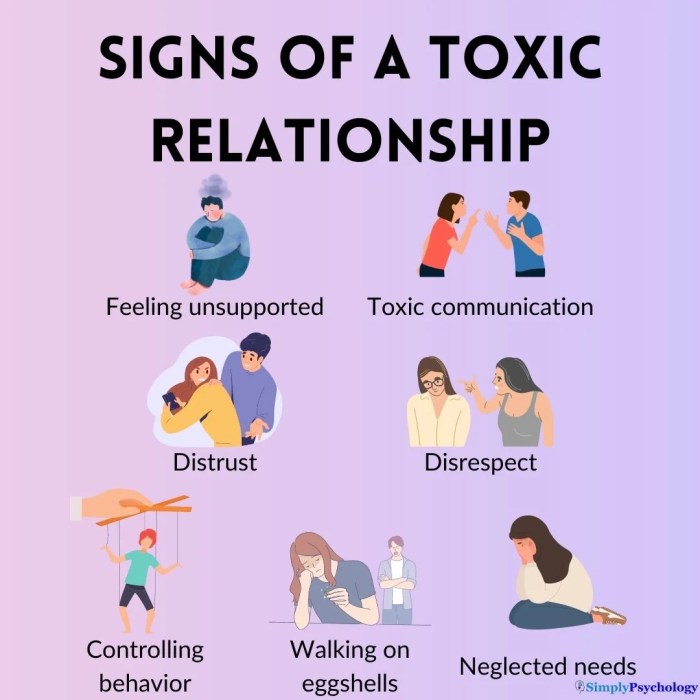
Starting with Signs of a toxic relationship, this introduction aims to draw in readers with a compelling overview of the topic, highlighting key aspects of toxic relationships and why it’s crucial to identify them early on.
Following this, we delve into the impact of toxic relationships, exploring the emotional toll, effects on self-esteem, and isolation from support systems.
Signs of a toxic relationship
Recognizing the signs of a toxic relationship is crucial in maintaining emotional well-being and establishing healthy boundaries.
Identifying common behaviors indicating toxicity
- Constant criticism and belittling of one partner
- Manipulative behavior aimed at controlling the other person
- Isolation from friends and family by one partner
- Unwillingness to communicate openly or resolve conflicts peacefully
Role of manipulation in toxic relationships
Manipulation often involves deceptive tactics to gain power and control over the other person’s thoughts and actions. This can lead to feelings of confusion, self-doubt, and low self-esteem in the victim.
Impact of constant criticism in a relationship
- Diminished self-worth and confidence
- Increased anxiety and stress levels
- Inability to express oneself authentically
- Development of a cycle of negativity and self-blame
Signs of control and possessiveness in a toxic relationship
- Monitoring and restricting the other person’s activities
- Excessive jealousy and suspicion without valid reasons
- Dictating how the other person should dress, behave, or interact with others
- Using threats or intimidation to maintain dominance in the relationship
Effects of a toxic relationship
Being in a toxic relationship can have severe emotional consequences on an individual. The constant stress, manipulation, and negativity can take a toll on mental well-being.
Emotional toll of being in a toxic relationship
- Feelings of anxiety, depression, and worthlessness
- Emotional instability and mood swings
- Constant fear of saying or doing the wrong thing
Impact on self-esteem and confidence
- Constant criticism and belittling can lead to low self-esteem
- Loss of confidence in decision-making abilities
- Feeling unworthy of love and respect
Toxic relationships leading to isolation
- Manipulation and control tactics can result in distancing from friends and family
- Isolation from support systems due to the toxic partner’s influence
- Feeling ashamed or embarrassed to share the truth about the relationship
Long-term effects of staying in a toxic relationship
- Development of trauma and PTSD symptoms
- Difficulty forming healthy relationships in the future
- Possible physical health consequences due to chronic stress
Characteristics of a healthy relationship
In a healthy relationship, both partners are able to communicate openly and honestly, show mutual respect, establish boundaries, and support each other’s growth and well-being.
Comparison of Healthy vs Toxic Relationship Dynamics
- In a healthy relationship, communication is open, honest, and respectful, while in a toxic relationship, communication is often manipulative, dishonest, and disrespectful.
- Healthy relationships prioritize mutual respect, trust, and support, whereas toxic relationships are characterized by control, jealousy, and power struggles.
- In healthy relationships, partners encourage each other’s personal growth and independence, while toxic relationships often involve codependency and lack of individuality.
Key Elements Defining a Healthy Relationship
- Effective communication: Open, honest, and respectful communication is essential for resolving conflicts and building trust.
- Mutual respect: Valuing each other’s opinions, feelings, and boundaries is crucial for maintaining a healthy relationship.
- Boundaries: Establishing and respecting boundaries helps partners feel safe, secure, and understood in the relationship.
- Support and encouragement: Partners in a healthy relationship cheer each other on, provide emotional support, and celebrate each other’s successes.
Importance of Communication in Maintaining a Healthy Relationship
Effective communication is the cornerstone of a healthy relationship. It allows partners to express their needs, concerns, and feelings openly and honestly. By communicating effectively, partners can resolve conflicts, build trust, and deepen their emotional connection. Without clear communication, misunderstandings can lead to resentment, frustration, and distance in the relationship.
Role of Respect and Boundaries in Healthy Relationships
Respect and boundaries are essential in healthy relationships as they create a foundation of trust, safety, and mutual understanding. Respecting each other’s boundaries helps partners feel valued, heard, and respected. It also fosters a sense of autonomy and individuality within the relationship. By upholding respect and boundaries, partners can navigate conflicts, maintain a healthy balance of independence and togetherness, and cultivate a strong, lasting bond.
Seeking help and moving on from a toxic relationship
When in a toxic relationship, seeking help and moving on can be a challenging but crucial step towards regaining your well-being and happiness.
Seeking Support in a Toxic Relationship
It is essential to reach out for support when dealing with a toxic relationship. Here are some resources and tips to consider:
- Seek guidance from a therapist or counselor who specializes in relationships.
- Confide in trusted friends or family members for emotional support.
- Contact helplines or support groups for individuals in similar situations.
- Consider joining online forums or communities dedicated to healing from toxic relationships.
Setting Boundaries and Asserting Yourself
Establishing boundaries and asserting yourself is crucial in a toxic relationship to protect your well-being. Here are some strategies to consider:
- Clearly communicate your needs and boundaries to your partner.
- Practice assertiveness and stand firm in defending your boundaries.
- Seek professional help to navigate setting boundaries effectively.
- Understand that it is okay to prioritize your mental and emotional health.
Rebuilding Self-Worth After Leaving
Leaving a toxic relationship can take a toll on your self-esteem, but it is possible to rebuild your self-worth. Consider the following strategies:
- Engage in activities that bring you joy and boost your confidence.
- Practice self-care routines to nurture your physical and emotional well-being.
- Seek therapy or counseling to work through any lingering self-esteem issues.
- Surround yourself with supportive and positive individuals who uplift you.
Importance of Self-Care and Healing
After ending a toxic relationship, prioritize self-care and healing to recover and move forward. Here’s why self-care is essential:
- Self-care helps in restoring balance and grounding after a tumultuous experience.
- Healing allows you to process emotions and trauma from the toxic relationship.
- Practicing self-compassion fosters self-love and acceptance.
- Taking time to heal enables you to rebuild your life on a healthier foundation.
In conclusion, understanding the signs of a toxic relationship is vital for one’s well-being. By recognizing these behaviors and seeking help, individuals can break free from harmful dynamics and move towards healthier, more fulfilling relationships.
Question & Answer Hub
What are some subtle signs of a toxic relationship?
Subtle signs include constant criticism, feeling controlled, and a lack of personal boundaries.
How can one rebuild self-worth after leaving a toxic relationship?
Rebuilding self-worth involves self-care practices, seeking therapy, and surrounding oneself with a supportive network.
Is it common for toxic relationships to lead to isolation from friends and family?
Yes, toxic relationships often involve isolating tactics that distance individuals from their support systems.